A retailing puzzle
Normally, when dealing with different retailers that operate in the same sector of the retail business, it is obvious which are better run. For instance, there are three major chains of Starbucks clone in the UK: Coffee Republic, Caffe Nero, and Costa Coffee. (I will exclude discussing Starbucks themselves here. Their rules are different, as they have a parent company with deep pockets). A couple of years ago all three had similar numbers of stores, but I found quickly that my preference was for Caffe Nero. Their prices were a little cheaper, their coffee was better, and somehow they just understood the little details of their business better than their competition. This made going there for a coffee simpy more comfortable, and in this particular business, comfort is everything. More than anything else what they are selling is a comfortable place to sit down.
And this has been reflected in subsequent events. Caffe Nero have since outperformed their competition in terms of profitability, they have gone on an expansion boom and have opened lots of new stores, and their stock price has gone through the roof. Coffee Republic have gone down the tubes, and Costa Coffee (who aren't quite in the same business, for reasons that are too lengthy to explain right here) have stood still. (Starbucks have also been expanding rapidly).
And this is fairly normal. Well run businesses have a certain vibe about them. Usually I can just feel it. (A few years back, it was clear from the vibe that Woolworths in Australia was a better run supermarket business than Coles, and this eventually filtered its way through to the stock price, too). But there is an odd exception, which is supermarkets in the UK.
Tesco have long been a stockmarket darling, and have expanded massively and rapidly due to their superb understanding of the market, and their superbly designed computer systems and logistics. Their competitor Sainsbury's have done far less well at these types of things, and are thus in decline.
At least , that is the conventional view held by most market analysts, and that is the view reflected in the stock prices of the two companies. However, I find counter-intuitive, because I like shopping in Sainsbury's more than I do in Tesco. Sainsbury's shops seem better designed and the goods better arranged. And they are full of all manner of really yummy things that I don't find in Tescos.
As it happened, after having a coffee with Brian Micklethwait in the new Pimlico Caffe Nero (once again, I think the market is right on that one) I popped into the new big Sainsbury's in Pimlico, and as is always the case when I go into that Sainsbury's, I found myself coming out with bags of groceries: in this case a freshly made pizza, a piece of smoked cheddar cheese (although they did not have the unpasteurised brie that I have bought there in the past today) and a few other things. This is a really nice supermarket, and I find it hard to believe that the parent company is in decline. Some would say that Tesco wins in computers, logistics and supply chains rather than store design, but I am not so sure. Stocking a supermarket as well as this one is stocked requires good logistics and supply chains.
But that is conventional wisdom. Perhaps there will be a shift back to Sainsbury's and my intuition is right. Or perhaps I just have weird tastes in groceries.
Wednesday, March 24, 2004


Tuesday, March 23, 2004

Redirection
I have a piece on the on field pecking order in test cricket today over at ubersportingpundit.
I have a piece on the on field pecking order in test cricket today over at ubersportingpundit.
Business Methods
When I purchased my computer, it came with a "90 day free trial" version of Norton Anti-virus (these days owned by Symantec). This whirred away regularly for three months, telling me that it was finding and deleting lots of viruses in my e-mail. A few days ago the subscription expired, meaning that the software still works but that it no longer updates itself for new viruses. Given that the virus situation is bad, shall we say, and given that if I get infected my computer will then start spewing crap to all my friends and I would rather not do this, I just bought a subscription giving me another twelve months of updates. This wasn't especially expensive - costing about the cost of a nice lunch I suppose - but Symantec will no doubt be pleased that I am a paying customer. Which is of course fine, and indeed good. They provide me with a useful service and I pay for it. God bless capitalism. (Although the authors of the actual viruses can go fuck themselves).
What interests me though is the nature of the financial relationship between Dell and Symantec. Dell install the software on their computers, and it is beneficial to them to advertise the computer as having anti-virus software installed. (Most people do actually need it). So Dell are getting some benefits. However, Symantec get paying customers through the relationship - for instance me. (Paying customers who are paying rather less than customers who simply buy the anti-virus software cold, however). So what is the net money flow between the two companies? Are Symantec actually paying Dell to install Symantec's commercial software on Dell's computers? Or is it one of those neutral situations where no money changes hands? Or is Dell paying Symantec for the software? (I really doubt this). Or do Symantec pay a commission to Dell when someone like me becomes a paying customer? (I rather doubt this, as when I registered with Symantec the registration process was surprisingly low tech and I was not required to provide enough information for them to identify my computer as a Dell, although I suppose they could find this out some other way easily enough if they wanted to.
Monday, March 22, 2004
Redirection
I have a piece on watching India play Pakistan in an Australian theme bar in south London, and what this says about the state of English cricket, over at Samizdata.
I have a piece on watching India play Pakistan in an Australian theme bar in south London, and what this says about the state of English cricket, over at Samizdata.
Sunday, March 21, 2004
I am sad
Ahhhh. This is so cute.
(Link via Slashdot).
Update: There is another picture of it here if you scroll down towards the bottom, which gives you an idea of just how small it is. Clearly we are talking one of the hits of Cebit.
Further Update: The other thing is striking (but in no way surprising) is that this motherboard borrows a few things from laptops. The first thing you ask is "Where does the memory go?", but of course the memory slot is of the kind that takes the SO-DIMM modules that are commonly used in laptops. And the first reaction I had when looking at it was "Nice, but it doesn't have any PCI slots". In fact it has one, but it is one that uses the mini-PCI connector, that is also something that you see mainly on laptops. Not all laptops have them - but more and more do. Mine does (and the slot is filled with a wireless card) as do a lot of Toshibas. Hopefully as they become more and more common there will be more and more cards made for them.
Saturday, March 20, 2004
Redirection
I have a piece on Australia's second test victory, Shane Warne, and the world test wicket taking record over at Samizdata.
I have a piece on Australia's second test victory, Shane Warne, and the world test wicket taking record over at Samizdata.
Friday, March 19, 2004
Itunes has changed my life.
No real point. It just has. I thought I would share that with you. If someone would explain to me how to get my iTunes "recently played" list to appear on my sidebar as it does for the Yuppies of Zion, I would be delighted to share my dreadful taste in music with you, too.
No real point. It just has. I thought I would share that with you. If someone would explain to me how to get my iTunes "recently played" list to appear on my sidebar as it does for the Yuppies of Zion, I would be delighted to share my dreadful taste in music with you, too.
Thursday, March 18, 2004
The modern world
Well, if you are a famous science fiction writer and you hold an open house party during a major media festival and you invite all your fans and friends via the internet, this is what happens. People drink all the lychee brandy.
Update: The culprit has been found.
Well, if you are a famous science fiction writer and you hold an open house party during a major media festival and you invite all your fans and friends via the internet, this is what happens. People drink all the lychee brandy.
Update: The culprit has been found.
Redirection
I have a strange little observation on the timing of the Australian centuries in the second test against Sri Lanka over at ubersportingpundit.
I have a strange little observation on the timing of the Australian centuries in the second test against Sri Lanka over at ubersportingpundit.
Wednesday, March 17, 2004
Thoughts on Spain and terrorism
This started out as an addition to the comments thread of the previous post. It was too long for my comments system so I turned it into a post.
The thing that has worried me the most over the last year is that there would be a major terrorist attack in Europe, that large swathes of the population would conclude that the attack had been provoked by the war on terrorism, and that the response would be for Europe to feel the blow and then cower in its shell and essentially let the Islamicists win. (What do you do then? Allow them to have as many cells in your country as they like?) This seems to have happened in Spain over the last week. (And Romano Prodi's remark that "It is clear that using force is not the answer to resolving the conflict with terrorists" is one of the most appalling things I have ever heard). However, the whole ETA or not business really did muddle things. I think certainly the Aznar government lost at least some votes because it was seen as trying to spin the terrorist incident in a direction that was to its advantage rather than to seek the truth. (I don't think this accusation is especially fair - there may have been a little denial, but I don't think there was any genuine attempt to hide anything. The PP did announce that Morroccans had been arrested - it was not a leak. And it did this before the election).
(Interesting though that implicit in this interpretation is the clear message that dealing with ETA with force was right, but dealing with Al Qaeda was wrong).
However, certainly a fair bit of the political shift was exactly the "surrender to bin Laden and perhaps he won't hurt us any more" response that a log of the blogosphere has declared it to be. And Al Qaeda will read it as such. And I find it hard to imagine they will not try something similar later in the year. Their attacks since September 11 have been on places with key grievances in Muslim history (Indonesia, Turkey, Spain, Israel, as well as places actually in the Muslim world). Australia would be peripheral to that, but it does have an election in the second half of the year (or conceivably early 2005, but most likely late this year) that could be targeted in the same way. And of course there is the American election. Thankfully, it is unimaginable that America would respond to a terrorist attack in the same way that Spain has. America is arguing more about how real the threat is than the wisdom of responding to terrorism with force. If the threat was shown to be real in this way, America would respond by re-electing President Bush and giving him increased resources to resume the war. And we may be thankful for this. As for Australia, I do not know where it stands. However ghastly the Australian left is, the country would not be as limp wristed as Spain. Australians know they are on the edge of an unstable region of the world and are surrounded by Muslims, and they have recently been expanding their military and attampting to minimise the danger in failed states nearby. (That's what the peacekeeping troops in the Solomon Islands are about). I think there is a very real chance that Australia would respond to the terrorist threat by re-electing its present government and relatively little changing. The left would scream a lot, but in Australia it doesn't represent as large a portion of the population as it thinks it does, which is why Australia elects fundamentally conservative governments most of the time. The situation is similar to that in the US I think. If the election is fought on domestic issues, the incumbent will probably lose. But if it is fought on foreign policy, it will win.
And as to what would happen in Britain if an attack occurred here, I do not know. (There are lots of people in middle England whose response would be to fight, but I doubt that the ruling class in the Labour party (Blair excepted) is amongst them. But horribly, I think we may find out).
Tuesday, March 16, 2004
At times I don't feel especially safe in this world any more
Spanish police now claim to have the names of the bombers who violated Madrid last week - they are all Moroccans. An Algerian has also been detained in Donostia/San Sebastian in the Basque country in connection with the bombings. I don't know what he was doing there - I think that I would prefer it if there was not an ETA connection, however contemptible ETA are. Yes, as has been becoming more and more obvious for the last three or four days, it was an attack from Al Qaeda or someone connected with them. One wonders where the next terrorist attack will be. I doubt London is especially safe, but on the other hand it's an election year in Australia, and Australia could well be a target too. (On the other hand, it lacks the same "The Andalusian catastrophe must not be repeated" rant quality of Spain).
Spanish police now claim to have the names of the bombers who violated Madrid last week - they are all Moroccans. An Algerian has also been detained in Donostia/San Sebastian in the Basque country in connection with the bombings. I don't know what he was doing there - I think that I would prefer it if there was not an ETA connection, however contemptible ETA are. Yes, as has been becoming more and more obvious for the last three or four days, it was an attack from Al Qaeda or someone connected with them. One wonders where the next terrorist attack will be. I doubt London is especially safe, but on the other hand it's an election year in Australia, and Australia could well be a target too. (On the other hand, it lacks the same "The Andalusian catastrophe must not be repeated" rant quality of Spain).
Monday, March 15, 2004
Redirection
I have a couple of photos of a Japanese television showing a Rugby World Cup semi-final over at ubersportingpundit.
I have a couple of photos of a Japanese television showing a Rugby World Cup semi-final over at ubersportingpundit.
Sunday, March 14, 2004
Saturday, March 13, 2004
An odd mistake
This primer from the Washington Post gives a reasonable breakdown of the ethnic situation in Spain, and who ETA are, but it makes a curious mistake
Yes, to all that except for the "believed by sholars to be of Celtic origin", which is completely wrong. Yes, there were Celts in Spain before the Romans got there and the Celts are all gone. However, the Basques were there well before that, and all the evidence suggests that they were there a long time before that. (Just how long a time is hard to say). Linguistically (and in some ways genetically, although there has been more mixing in this regard) the Basques are a complete outlier. They are not related to anyone that we can find. Some people have argued that they may havve been related to the Etruscans of Italy, but since the Etruscans have all been dead for thousands of years it is hard to tell.
This primer from the Washington Post gives a reasonable breakdown of the ethnic situation in Spain, and who ETA are, but it makes a curious mistake
The Basque people, believed by scholars to be of Celtic origin, have inhabited the stunningly beautiful regions of northeast Spain and southern France for centuries. They speak their own language, celebrate their own holidays and have their own traditions, which included fierce resistance to the autocratic regime of dictator Francisco Franco.
Yes, to all that except for the "believed by sholars to be of Celtic origin", which is completely wrong. Yes, there were Celts in Spain before the Romans got there and the Celts are all gone. However, the Basques were there well before that, and all the evidence suggests that they were there a long time before that. (Just how long a time is hard to say). Linguistically (and in some ways genetically, although there has been more mixing in this regard) the Basques are a complete outlier. They are not related to anyone that we can find. Some people have argued that they may havve been related to the Etruscans of Italy, but since the Etruscans have all been dead for thousands of years it is hard to tell.


Friday, March 12, 2004
Redirection
I have a piece on Australia's victory in the first test against Sri Lanka and on the superb bowling of Shane Warne over at ubersportingpundit.
I have a piece on Australia's victory in the first test against Sri Lanka and on the superb bowling of Shane Warne over at ubersportingpundit.
Thursday, March 11, 2004
Wednesday, March 10, 2004
Really obvious advice of the day
Don't look up the current price for the same configuration of a computer that you bought three months ago, because it will be cheaper. Computers are just like that. (No it isn't horrendously cheaper, but about 10% so. Of course, I really needed the new machine three months ago). And of course there is a new fancy model as well, although that one is a fast Pentium 4 machine rather than the Centrino model I have, and while considerably faster it is probably less good for running from batteries a lot. It's heavier too. It's got more USB ports and a DVI port though - not that I have anything to connect it to from a DVI port.
Don't look up the current price for the same configuration of a computer that you bought three months ago, because it will be cheaper. Computers are just like that. (No it isn't horrendously cheaper, but about 10% so. Of course, I really needed the new machine three months ago). And of course there is a new fancy model as well, although that one is a fast Pentium 4 machine rather than the Centrino model I have, and while considerably faster it is probably less good for running from batteries a lot. It's heavier too. It's got more USB ports and a DVI port though - not that I have anything to connect it to from a DVI port.
Tuesday, March 09, 2004
Redirection
I have a piece on watching Manchester United get eliminated from the Champions League by Porto over at ubersportingpundit.
I have a piece on watching Manchester United get eliminated from the Champions League by Porto over at ubersportingpundit.
An interesting thought
Brian Micklethwait made some observations on why he thinks it is a bit silly to have a passenger wheel inside a circular hole in the World Financial Center being built in Shanghai. Given that the point of such wheels is to get you higher than you could get without them, I have to agree. (The future skyline of Shanghai looks cool though. I must go some time. The North Bund Tower looks like something out of the Thunderbirds).
This caused me to browse Skyscraper Page a little. I ended up at this picture of the tallest destroyed buildings. The largest buildings in the picture by far are of course the two World Trade Center towers that stood in New York, but on the very right of the picture we have the Great Lighthouse of Alexandria. The combination is poignant somehow, but I will not try to draw a message of any kind from it.
Monday, March 08, 2004
Redirection
I have a post on the politics of international soccer and the game that Wollongong Wolves did not play against Deportivo la Coruna over at ubersportingpundit.
I have a post on the politics of international soccer and the game that Wollongong Wolves did not play against Deportivo la Coruna over at ubersportingpundit.
Mmmmm. Interesting
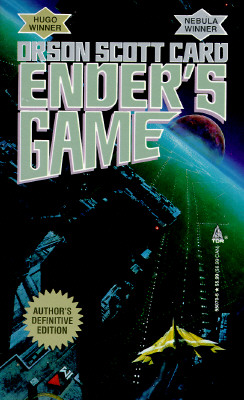
You're Ender's Game!
by Orson Scott Card
To you, most everything is a game. It's summertime, and the living's
easy. Even when there's a war on, it's just a game to you. But even though you've
historically been able to meet every challenge, there are some doubts about what lies
ahead. Are you sure you're up to the next test? Don't forget to pay attention to your
siblings.
Take the Book Quiz
at the Blue Pyramid.
Sunday, March 07, 2004
Movies
I saw 21 Grams this morning. Good, but I have one or two thoughts on it. And I think I may go out for an ale first.
I saw 21 Grams this morning. Good, but I have one or two thoughts on it. And I think I may go out for an ale first.
Saturday, March 06, 2004
Redirection
I have a piece on the cricket team of the United States of America's glorious qualification for the ICC Champions Trophy at ubersportingpundit and a silly photo over at Samizdata.
Update: Ubersportingpundit is down, but Scott promises it will be back in a day or two. As the Australian cricket team is playing a test starting tomorrow morning, I may cover it here for a couple of days until uber is back.
Friday, March 05, 2004
Redirection
I have a piece on Samizdata commemorating the fact that today is the tenth anniversary of the first spam. (Yes, really).
Update: I also have a little travel blogging about a trip to Kenya I made in 1993.
I have a piece on Samizdata commemorating the fact that today is the tenth anniversary of the first spam. (Yes, really).
Update: I also have a little travel blogging about a trip to Kenya I made in 1993.
A fun blog
I will say I have to find the 31st of January entry for this blog to be just sidesplittingly funny.
I will say I have to find the 31st of January entry for this blog to be just sidesplittingly funny.
I am not a fan of Bill Gates
My laptop is a widescreen model. As I have discovered that I like to watch DVDs on it in public places, this is good. Most movies are made in an aspect ratio of 1.85:1, although a substantial proportion are also made in 2.35:1. Widescreen televisions normally have an aspect ratio of 16:9 (1.78:1) which is close enough to be largely indistinguishable for most viewers, although either a small amount must be chopped off at the sides or the top and bottom must be cropped slightly less than is the case in the cinema.
However, widescreen computer screens such as mine usually use an aspect ratio of 16:10 (1.60:1). This means that there will be always be (very) narrow black bars at the top and bottom of the screen. This was a necessary compromise for laptop computers in particular, as a 16:9 screen is a little too awkward for computer applications.
Once you have a DVD player in your computer, it is necessary to get some software to actually play DVDs. There are a variety of solutions. I presently have four installed on my laptop: Cyberlink PowerDVD, Dell Media Experience (which I think is running using the same engine as PowerDVD), Interactual Player, and Microsoft Windows Media Player. The first three of these have no trouble realising that I have a wide screen, and when set to "full screen" they adjust to the full width of the screen. Windows Media Player seems incapable of realising this, however, and it for some reason assumes that I have a UGA (1600x1200) screen rather than the WUGA (1920x1200) screen that I in fact have. Therefore, with Media Player the whole picture is scaled significantly smaller and I get a wide black margin all the way round the picture. Well done Microsoft.
It may well be that there is some way to configure Media Player so that the pictures will scale to fill the whole screen, but 15 minutes of fiddling around with the menus and the laughably named "help" function did not enable me to find it. Whether it exists is not really the point. Media Player should be able to find out the size of the screen for itself, just as the other players can. And if it can't, a manual configuration option should be easy to find and set.
I guess this means I am a blogger
I went to slashdot this morning, and the top headline was "Glenn Urges Direct-to-Mars trip". The thought that went through my head was that I am sure that Glenn is in favour of Direct-to-Mars, but is he really so influential that this thought deserves a deadline on slashdot. Then, "Oh, John Glenn".
I went to slashdot this morning, and the top headline was "Glenn Urges Direct-to-Mars trip". The thought that went through my head was that I am sure that Glenn is in favour of Direct-to-Mars, but is he really so influential that this thought deserves a deadline on slashdot. Then, "Oh, John Glenn".
Thursday, March 04, 2004
Marketing that appears to be working
I was sitting in a pub today working on my laptop. There actually was WiFi in the pub, but it was ridiculously priced for pay WiFi, so I was working off line. However, I was writing e-mail for sending later. Someone else came up to me and asked me the following question.
"Have you got a Centrino connection on that laptop"?
I sad that I was working offline, and he went away, but the interesting thing is the brandname he asked about. Intel has been promoting the "centrino" brandname for certain laptops using its chips. Specifically, the laptop has to use the Pentium M, have 802.11b (or 11g) wireless, and use the Intel 855 chipset to use the brandname. Intel has been paying for lots of advertising showing people work wirelessly on its "Centrino" laptops. The point has clearly been to associate the "Centrino" name with 802.11 wireless. Judging by this resonse, it is succeeding. Presumably when the gentleman goes into a computer shop to buy his next laptop, he will ask for a "Centrino" system. Presumably, as far as Intel hopes, this will guide him to high end rather than low end laptops, and also will guide him away from laptops with AMD and other non-Intel chips. If he just asks for a machine with WiFi or "wireless", or "802.11" this won't happen, but this is presumably what Intel is trying to prevent. So good marketing for them. Trying to attach a proprietary name to a non-proprietary product is always fun. (Apple is good at this, too. Bring on airport extreme).
(As it happens, my laptop does satisfy Intel's requirements to be called a "Centrino" system. It has a Pentium M, it has 802.11g wireless, and it has the 855 chipset. However, you won't see the word "Centrino" on it anywhere, and the most prominent brandname is Dell's. (There are small stickers on the front right saying "Intel Inside: Pentium M" and also "Designed for Microsoft Windows XP"). Dell has no wish to promote Intel's brands excessively, I suspect, and Intel is unable to insist upon it. Dell must be Intel's single biggest customer, and Dell must be able to drive a very hard bargain. The big thing that Dell can threaten Intel with is the possibility that they might start offering AMD based machines as well as Intel based machines (or in an extreme case they could switch entirely to AMD, although this is not likely). Intel would obviously be appalled if they did this, so at the moment Dell gets to impose most of the conditions, I think. Competition is a fine thing. Shame it is so much harder to have any kind of similar hold over Microsoft).
Update: It turns out that to be called a "Centrino", a laptop also has to have Intel's own 802.11 hardware, whereas mine has an 802.11g mini PCI card that is Dell branded. Apparently the base (802.11b) configuration of the Dell Inspiron 8600 does use the Intel wireless hardware and so can be called a "Centrino", but this one cannot. That seems unnecessarily complex.
Wednesday, March 03, 2004
I am meddlesome
While having a latte in my favourite bookstore cafe this afternoon, I was browsing M.J. Simpson's biography of the late Douglas Adams. When his daughter Polly was born in 1994, a room was redecorated for her, and Adams' wife Jane expressed the observation that the ethernet port in the room could perhaps be removed. However, Adams insisted that it stay, as he thought his daughter would need it soon enough. (Apparently, Polly's first computer (a mac) was indeed bought for her when she was three).
Reading this, though, I was struck by the fact that the wired house with ethernet ports seems kind of quaint now. I managed to avoid being in a position where I had a home that needed wiring in the 1990s, and I now know that I am never going to do this. I do now have a "home ethernet", but it just consists of a little box that is an all in one DSL modem, router, and wireless access point. If I ever want to connect more than one computer to the ethernet, I just buy a (trivially cheap) wireless card for the computer, and bingo. If I move house, I just take it all with me. No rewiring required. Soon I suspect that all kinds of devices: printers, speakers, scanners, set top boxes, televisions, you name it are all going to have inbuilt wireless. It is going to be an interesting time.
However, there are still complications. I was in PC World today, and a customer wanted wireless in his home for his laptop. He already had a cable internet connection, and the salesman was attempting to sell him a router/wireless access point. Or was he trying to sell him just an access point. The salesman had a puzzled look on his face. Because I sometimes can't help it, I interrupted, explaining that there were three things needed: a modem to connect to the internet, a router so that more than one computer coud use the same internet connection, and a wireless access point for wireless access, and that there were various combinations of these devices available in one unit. If he had a cable internet connection with a modem with an RJ-45 socket as supplied by his ISP (which I believe is standard) then he needed a router and a wireless access point, preferably in the same unit. I either may or may not have got the message across. (Talking about software routers was something that I think wisely I avoided).
But I can't help myself sometimes. Certainly the huge amount of similar but slightly different network hardware on the shelves of a place like that is complicated.
Tuesday, March 02, 2004
That was a long hiatus from blogging
Alan Little discusses a list of the most successful 50 films ever in Germany by number of tickets sold.
This is actually an interesting metric, and one I have not seen before. Normally there are two ways of comparing box office grosses. The simplest is simply the nominal box office gross. This is simply the number of dollars spent on tickets for the film, with no adjustment for inflation at all. This is fine for comparing films released in the same year, and quite meaningful for films released in the same decade, but after that it becomes highly misleading if it is read in a simple way. The other was is inflation adjusted box office gross. It should be noted that the inflation rate that is being adjusted for is not the general inflation rate, but the inflation rate in cinema ticket prices. The box office gross for the film is divided by the average ticket price for the year in which the film was released, and the resulting number is multiplied by the average ticket price now. (This may be a multi-step process if a film has features multiple re-releases in different years).
Therefore, in crude terms, the inflation adjusted gross compares the films in terms of the total number of tickets sold. This is probably a better metric that simple (nominal) box office gross, but it is still a flawed one. The population of the US and other countries has increased considerably over time, so that the same number of tickets sold today means that a substantially smaller percentage of the population has seen a film than was the case in 1950. On the other hand, there are many other alternative forms of entertainment that people can spend their money on these days, so the comparison isn't really a direct one, but a key point is that it is possible for more people to see a film than in the past simply because there are more people.
And why did I say "crude terms" above. Well, the inflation adjusted box office gross would be a direct comparison in terms of ticket numbers sold if the average ticket price was the same for all films, and this is manifestly not so. Children's tickets cost less than adult tickets, and therefore the average ticket price is quite a lot lower for children's films than for films aimed at adult audiences. Therefore, if you carefully took this factor into account, and genuinely attempted to rank films by numbers of tickets sold, then children's films would jump considerably higher up the list than they do actually appear. Which is what appears to have been done wiith this German list. Grosses and numbers of tickets sold is further boosted for Disney films by the fact that Disney for many years made a lot of money re-releasing each of its its classic animated films every nine years or so, on the basis that there was a new generation of children every nine years who hadn't seen them. (Disney still does rerelease its old animated films from time to time in the cinema, but this is less of a big deal than it used to be because most of Disney's revenues on its old animated films now come from DVD and VHS).
And this, apparently, is the kind of list Alan is looking at. It has lots of children's films on it, precisely as one would expect in these circumstances. It has lots of recent children's films, which is unsurprising given that the current generation of people between about 10 and 25 (the "baby boom echo" generation) is the largest in history in purely numerical terms. Which is why the first Harry Potter film features as high as it does.
This is why the exhibition industry was so unhappy that there was no Harry Potter movie last year. Exhibitors make most of their money from selling Coke and popcorn, and the amount of Coke and popcorn sold is proportional to the total number of people there (and children may even consume more on average than adults). And the number of people who were there for the Harry Potter films was just gigantic.
As for The Jungle Book being at the very top, this isn't that surprising. It is one of Disney's finest animated films, and although it would not be at the very top of a similar list calculated for the US, it is possible that it might be in or near the top ten. Snow White and the Seven Dwarfs is the highest grossing Disney animated film in inflation adjusted US terms, but the fact that it was first released in 1937 would have meant there were certain obstacles to its performing at the box office in Germany in quite the same way it did in the US. (Just out of interest, Disney a couple of years back chose what they considered the ten best (or at least the ten potentially most commercially lucrative) of their animated movies for special "Platinum editiion" treatment on DVD. The ones they chose were Snow White, Beauty and the Beast, Aladdin, The Lion King, Bambi, The Jungle Book, Cinderella, The Little Mermaid, Lady and the Tramp, and 101 Dalmatians. Maybe the list is a little heavy on 1980s/90s Ashman/Merkin, or maybe not. (This genuinely was a golden era). But The Jungle Book always ends up on any list of Disney's best.
A sad announcement
I have a great many things on my plate between now and at least June, and as a consequence I am going to be unable to blog on a daily basis for at least the next little while. I am thus going to cease to blog daily on this blog. I may still write occasional pieces on Samizdata and ubersportingpundit, and when I do I shall link from here. But daily is just going to be too much effort.
Update: Just to clarify that, this does not mean I am abandoning this blog, but it does mean blogging shall be less regular, and pieces shall likely be shorter.
Monday, March 01, 2004
Some things really are inspiring.
When I was studying in Australia in the late 1980s, I would frequently visit the Valhalla Cinema in Glebe Point Road near the University of Sydney. This cinema at that time showed very offbeat and unusual films. (Soon afterwards it switched to more ordinary "art cinema" material, which is what it was still showing last thing I knew). In any event, in 1988 (I think) the cinema showed a "splatter film" from New Zealand named Bad Taste. So called "splatter films", in which characters run around at one another, waving weapons and covering one another with tomato sauce and sheeps brains, are a common thing to be produced by amateurs making films on miniscule budgets, because this is about the least expensive genre in which to make a film. This film had a more amusingly create plot than many - aliens come to earth to kill lots of humans to harvest the meat for the new human-burger bar that is being set up somewhere in the galaxy, and a group of people working for a special agency of the New Zealand government that does such things stop them, but, basically it is a film of the director and his friends running around, waving axes at one another and covering one another with sheeps brains and tomato sauce.
As splatter films went, it was pretty good. It had a weird sense of humor. And the audiences at the Valhalla enjoyed it. Playing an alien named "Derek" was the director, someone named Peter Jackson who had managed to rope his family and friends into making this with him. A couple of years later he made Meet the Feebles, a low budget parody (I suppose) of the muppets, which is the grossest, most disgusting film ever made with puppets. And after that he made another splatter film,Brain Dead (released in the US as Dead Alive), which helped spread his obscure cult following around the world.
After that, though, Jackson took an unexpected turn, making a film that was seen as an art film, Heavenly Creatures, the true and notorious story of two girls in New Zealand in the 1950s whose active fantasy life led to them murdering the mother of one of the girls. The film is notable for its remarkable character development, fine acting (this was the film that introduced Kate Winslet to the world) and particularly the extraordinary dream sequences of the actual fantasy life of the girls. This film was seen as a departure at the time, but these sequences in particular now seem a bridge between the splatter scences of the earlier movies and the armies of Orcs in certain later films. This film got Jackson lots of notice, an Academy Award nomination for screenplay for himself and his writing (and other) partner Fran Walsh, and opportunities to work with the Hollywood system. However, he insisted on making films for Hollywood in New Zealand with his existing crew. He made a film called The Frighteners for Universal, but it was not a hit. Perhaps largely as a consequence, his planned remake of King Kong was cancelled. (Around this time he made a hilarious spoof documentary called Forgotten Silver for New Zealand television. Then though, in a story I have told before, he then managed to persuade New Line Cinema to fund him to make three films of The Lord of the Rings. Again, he managed to make them entirely in New Zealand, and with his existing crew.
And of course the last of these films won eleven Academy Awards last night. The Oscar ceremony consisted of a succession of troupes of New Zealanders coming to the stage and thanking Peter Jackson and other New Zealanders, to the extent that Billy Crystal joked at one point that everyone in New Zealand had been thanked and it was time to start again from the top.
Brian Micklethwait, commenting on this, observed the following
I actually didn't mind all the dreary New Zealanders making speeches. The main reason I felt this is because their story is as good as it is. The story of how Jackson started filming members of his family running around waving axes at one another and ended up making movies for hundreds of millions of dollars that grossed billions of dollars and won eleven Academy Awards on the same evening is an immensely inspiring one and is a great story for him. But is is a great story for most of the other people as well. 21 people won Oscars for The Return of the King last night, and almost all of these have been working with Jackson for a long time as he has slowly been putting his film-making crew together. A number of them have been with him since Bad Taste, and a large portion since Heavenly Creatures. And oh boy, have they come a long way. And boy, do they all deserve their awards.
And I will officially stop blogging about movies for a little while, I think.
When I was studying in Australia in the late 1980s, I would frequently visit the Valhalla Cinema in Glebe Point Road near the University of Sydney. This cinema at that time showed very offbeat and unusual films. (Soon afterwards it switched to more ordinary "art cinema" material, which is what it was still showing last thing I knew). In any event, in 1988 (I think) the cinema showed a "splatter film" from New Zealand named Bad Taste. So called "splatter films", in which characters run around at one another, waving weapons and covering one another with tomato sauce and sheeps brains, are a common thing to be produced by amateurs making films on miniscule budgets, because this is about the least expensive genre in which to make a film. This film had a more amusingly create plot than many - aliens come to earth to kill lots of humans to harvest the meat for the new human-burger bar that is being set up somewhere in the galaxy, and a group of people working for a special agency of the New Zealand government that does such things stop them, but, basically it is a film of the director and his friends running around, waving axes at one another and covering one another with sheeps brains and tomato sauce.
As splatter films went, it was pretty good. It had a weird sense of humor. And the audiences at the Valhalla enjoyed it. Playing an alien named "Derek" was the director, someone named Peter Jackson who had managed to rope his family and friends into making this with him. A couple of years later he made Meet the Feebles, a low budget parody (I suppose) of the muppets, which is the grossest, most disgusting film ever made with puppets. And after that he made another splatter film,
After that, though, Jackson took an unexpected turn, making a film that was seen as an art film, Heavenly Creatures, the true and notorious story of two girls in New Zealand in the 1950s whose active fantasy life led to them murdering the mother of one of the girls. The film is notable for its remarkable character development, fine acting (this was the film that introduced Kate Winslet to the world) and particularly the extraordinary dream sequences of the actual fantasy life of the girls. This film was seen as a departure at the time, but these sequences in particular now seem a bridge between the splatter scences of the earlier movies and the armies of Orcs in certain later films. This film got Jackson lots of notice, an Academy Award nomination for screenplay for himself and his writing (and other) partner Fran Walsh, and opportunities to work with the Hollywood system. However, he insisted on making films for Hollywood in New Zealand with his existing crew. He made a film called The Frighteners for Universal, but it was not a hit. Perhaps largely as a consequence, his planned remake of King Kong was cancelled. (Around this time he made a hilarious spoof documentary called Forgotten Silver for New Zealand television. Then though, in a story I have told before, he then managed to persuade New Line Cinema to fund him to make three films of The Lord of the Rings. Again, he managed to make them entirely in New Zealand, and with his existing crew.
And of course the last of these films won eleven Academy Awards last night. The Oscar ceremony consisted of a succession of troupes of New Zealanders coming to the stage and thanking Peter Jackson and other New Zealanders, to the extent that Billy Crystal joked at one point that everyone in New Zealand had been thanked and it was time to start again from the top.
Brian Micklethwait, commenting on this, observed the following
With LOR3 (although actually what was being congratulated was the totality of LORs 1-3) doing so well, we also got to see lots of dreary New Zealander technicians making speeches. Their problem was that they sounded so pathetically apologetic. We're not worthy! We're not worthy! That was the vibe they gave off. NZers know how to look worthy winners of the Rugby World Cup (although they have rather lost the trick of actually winning it), so why can't they accept Oscars as if they think they deserved them? (Ghastly thought: maybe when the All Blacks do finally win the Rugby World Cup again, their captain will break down in tears.)
I actually didn't mind all the dreary New Zealanders making speeches. The main reason I felt this is because their story is as good as it is. The story of how Jackson started filming members of his family running around waving axes at one another and ended up making movies for hundreds of millions of dollars that grossed billions of dollars and won eleven Academy Awards on the same evening is an immensely inspiring one and is a great story for him. But is is a great story for most of the other people as well. 21 people won Oscars for The Return of the King last night, and almost all of these have been working with Jackson for a long time as he has slowly been putting his film-making crew together. A number of them have been with him since Bad Taste, and a large portion since Heavenly Creatures. And oh boy, have they come a long way. And boy, do they all deserve their awards.
And I will officially stop blogging about movies for a little while, I think.
Sunday, February 29, 2004
Redirection
I have a piece speculating about the winners of this evening's Oscar race over at Samizdata (and some sidebars at Michael Jennings extra).
I have a piece speculating about the winners of this evening's Oscar race over at Samizdata (and some sidebars at Michael Jennings extra).
Saturday, February 28, 2004
My digital camera does not do well in unusual or poor light conditions, I know.
It is one of the basic facts of being a technically savvy person that you end up doing lots of unpaid tech support for your friends and family. This is fine. I actually find locating and solving technical problems to be kind of satisfying, so a lot of the time I don't actually mind. (I am not sure how I feel about Perry de Havilland's home ethernet though. Debugging this is sort of like entering an intellectual cavern of death) And anyway, if nothing else your friendds and family end up buying you lunch quite frequently.
But this appears to be a new one. A campaign appears to be underway to ensure that I ultimately obtain the same model of digital camera as lots of other bloggers, so that I will then solve their problems as well as mine. This is, shall we say, an interesting development.
Further evidence that there is no reason for leaving the basement.
Yesterday, I realised that I wanted the DVD of Richard Linklater's semi-animated film Waking Life. I am not really prepared to pay any more for it that I would pay to see an ordinary film in the cinema, but lots of new DVDs can now be bought for less than that these days, so no huge obstacle, one would think. However, the deep discounting occurs on more mainstream films, and the more arty films are often harder to find cheap (although it can be done). I thought that today I might wander down to central Croydon, perhaps stop for a pint at my local, and look in the Virgin Megastore to see if they have the DVD cheap.
However, I was a little slow to get going, and browsed around on the internet. As it happened, I ended up buying the DVD from a place in Canada for £5.59 including postage. That's right. I just bought a DVD from a store in Canada to save myself a short walk. God bless the internet.
Update: Actually I went for the walk anywhere, and saw a movie while I was at it. The Virgin Megastore wanted £9.95 for the DVD, so I saved money by buying it from Canada, although the picture quality would have been marginally better on the British DVD.
Last observation on the Lomborg evening
Fellow Samizdatista Andy Duncan felt the need to introduce me to a few people that he knew, and in response, a couple of people (separately) came up out of the audience and said things like. "So you're Michael Jennings. I like your stuff. It's very nice to meet you". I seem to be developing a little bit of a reputation. This is interesting.
Fellow Samizdatista Andy Duncan felt the need to introduce me to a few people that he knew, and in response, a couple of people (separately) came up out of the audience and said things like. "So you're Michael Jennings. I like your stuff. It's very nice to meet you". I seem to be developing a little bit of a reputation. This is interesting.
Thursday, February 26, 2004
Redirection
I have a report on Bjørn Lomborg's lecture at the Adam Smith Institude this evening at Samizdata.
I have a report on Bjørn Lomborg's lecture at the Adam Smith Institude this evening at Samizdata.
Redirection
I have posted a quote about whether governments should be paying for asteroid protection over at Samizdata. (The comments discussion that follows it is a fun one, too).
I have posted a quote about whether governments should be paying for asteroid protection over at Samizdata. (The comments discussion that follows it is a fun one, too).
Wednesday, February 25, 2004
Cute
Well, this Flipstart handheld is the smallest full function PC I have ever seen, although we apparently have to wait until the end of the year to see it, which means it is really just vaporware. Still, at one pound it is amazingly small and light. As I see it, though, the two problems are (a) that the keyboard is so small that I wouldn't be able to touch type, and (b) that although the machine is described as having an optional DVD/CD-RW drive, this is clearly an external drive. And if it is external I might as well just buy a bigger laptop. A DVD player is one thing I do want on a machine that I carry with me when I travel, because it allows me to watch DVDs and VCDs. And a CD writer is worth having too. (For instance, I can back up my photographs and send myself the CD). So it might actually be better to use something like this Sony instead. This one has the advantage of not being vaporware and of being a mass market product, and I could probably have one of my own within half an hour if I was willing to spend the money). It is interesting that the size of CDs and DVDs is becoming a limiting factor. 7cm CDs and DVDs have always been supported by the DVD and CD standards bodies (and conventional players can play them as well as 12cm discs) but they have only ever gained (extremely small) niche markets and all commercially produced CDs and DVDs use the standard 12cm size. One option would be to put a drive that only supports the 7cm format on handheld computers like this - that way it would fit in the form factor. The trouble with that is that the principal reason I want a DVD drive on my computer is to allow me to play conventional DVDs with movies on them, and these are all in 12cm format. I am not sure that the Hollywood studios have any desire to release future formats with 7cm discs. There has been some discussion as to whether the future high-definition DVD should use the existing laser wavelength and codecs with higher compression ratios or whether it should use a shorter wavelength and the same MPEG-2 codec as conventional DVDs. A third option might be to use both these things, and then sell discs with movies on them to consumers in 7cm format.
But I don't think this will happen. The libraries of 12cm CDs and DVDs that we have already are too big. There is still too much to be gained from the higher capacity of a larger disc. The better option would be to make it easy for us to take our existing DVDs, rip the contents and recompress them with higher compression ratio codecs, and burn them onto 7cm DVDs ourselves, just as people do with the music on their CDs. And of course hard discs will be large enough before too long to store a good number of movies anyway. At that point it will be possible to store movies on our hard drive before going on a trip, and watching them along the way. (iMovies anyone?) Still, this will still deny us the option of buying a DVD from a shop when we are travelling and then playing it on our PC. (And of course the MPAA may well attempt to prevent us doing many of these things because of "piracy" concerns. Or it may not. We will see if it learns any lessons from the demise of the music industry).
And of course it may be that these ultra-small PCs remain a niche product anywhere, or that they merge with whatever our mobile phones are evolving into.
And of course the keyboard may reamain the limiting factor. I want to be able to touch-type, and these new machines are too small for this. It may be that machines the size of the Sony are about as small as wew are going to go. If so, a 12cm optical drive is going to fit. Additional advances may be in weight and thickness rather than size. It would be nice if a machine that size could be got down to 1.5 pounds or so.
Update Sony and Fujitsu have miniature computers without optical drives, too, although neither are quite as small as the FlipStart, although both seem too have more manageable keyboards.
Tuesday, February 24, 2004
More magic
Eugene Volokh also taught me one other clever trick. Unfortunately it won't tell my readers the number of trackbacks. It's easy enough to get technorati to send me an e-mail when someone leaves one though, so it is reasonably good. However, one must pay for it, and the whole point of using blogspot is not paying for it. Still, this trackbacks via technorati feature is clearly something that has been there in a feature sense for a while, but which has not been widely publicised in the blogosphere. It will be interesting to see how fast it spreads (at least amongst people using blogger) now that one of the big blogs is using it.
Eugene Volokh also taught me one other clever trick. Unfortunately it won't tell my readers the number of trackbacks. It's easy enough to get technorati to send me an e-mail when someone leaves one though, so it is reasonably good. However, one must pay for it, and the whole point of using blogspot is not paying for it. Still, this trackbacks via technorati feature is clearly something that has been there in a feature sense for a while, but which has not been widely publicised in the blogosphere. It will be interesting to see how fast it spreads (at least amongst people using blogger) now that one of the big blogs is using it.
Revelation of the Day
Most of the nonanonymous cobloggers on the [Volokh] Conspiracy are Jewish.
Oooh. Scary.
Most of the nonanonymous cobloggers on the [Volokh] Conspiracy are Jewish.
Oooh. Scary.
This post is intended to offend all Belgians equally
I am with Natalie Solent. I have a certain fondness for Belgium, too. She is quite right about the attraction of ending up in a cafe chair with croque monsieur and an amusingly shaped glass of the best beer in the world. The real question is whether Mark Steyn's Belgian half is Flemish or Walloon. If the former, then he is really Dutch and an heir to the culture that invented modern liberalism. If not, well, he is really sort of French, and that is kind of perplexing.
I am with Natalie Solent. I have a certain fondness for Belgium, too. She is quite right about the attraction of ending up in a cafe chair with croque monsieur and an amusingly shaped glass of the best beer in the world. The real question is whether Mark Steyn's Belgian half is Flemish or Walloon. If the former, then he is really Dutch and an heir to the culture that invented modern liberalism. If not, well, he is really sort of French, and that is kind of perplexing.
Redirection
I address the important philosophical question of when a cricket match actually becomes a cricket match over at ubersportingpundit.
I address the important philosophical question of when a cricket match actually becomes a cricket match over at ubersportingpundit.
Monday, February 23, 2004
My mantra
I have one basic rule with respect to computer problems. And this is, do not ever under any circumstances call tech support. Figure out how to fix the problem myself, good. Google for a fix, good. Ask friends for help, good. Call tech support, no, because they are all idiots. (This rule also may or may not apply to calling your employer's IT helpdesk depending on circumstances). However, this hysterically funny Salon article (irritating click through advertisement before you can read the full article) explains that things are far, far worse than I thought.
I have one basic rule with respect to computer problems. And this is, do not ever under any circumstances call tech support. Figure out how to fix the problem myself, good. Google for a fix, good. Ask friends for help, good. Call tech support, no, because they are all idiots. (This rule also may or may not apply to calling your employer's IT helpdesk depending on circumstances). However, this hysterically funny Salon article (irritating click through advertisement before you can read the full article) explains that things are far, far worse than I thought.
Men and their urge to fiddle with cars and/or computers, and more discussion of my own computer needs
When I was a kid, there was a certain sort of young man who you would see with his car on his driveway, and he would have the bonnet up (or he would be underneath the car) and he would be constantly fiddling with the endine, or he would have much of the engine disassembled next to the car. In those days cars were relatively simple devices, and it was possible to figure out how they worked, do their own maintenance, and tweak their performance largely by doing so. And of course there was lots of empty space under the bonnet. It was possible to actually reach in and get at the components of your engine.
Improvements in engineering and the computer revolution have largely killed this. Cars are now full of complicated electronics and sealed box components. Many simple devices (eg a carburetor), have been replaced by more complicated equivalents (fuel injection). There is little empty space, and everything is pushed so close together that it is hard to take apart and put together again. While men still love their cars, car maintenance has become a far more specialised task.
However, something else has come into being, which is the standardisation and compatibility of computer parts. Many men now are frequently to be found with the side of their computer's case open, fiddling with the insides, changing boards and cards, and in extreme cases doing things live overclocking the CPU to tweak it and make it run better. Once again, the insides of desktop computers have lots of open spaces, and lots of places where it is possible to fiddle.
This attitude seems very similar to the old fiddling with the engine of your car business. There is something very male about it. I am not sure if it is the same people who would once have done one who now do the other, however. I would have never bothered with car engines and the like - they are just too dirty and require too much physical effort - but the urge to fiddle around inside computers is for me a strong one.
But perhaps this is going away, too. The percentage of computers sold that are laptops is increasing. Whereas they were once largely just a business tool, they are becoming a major consumer product as well. The growth in readily available wireless networking is making them more attractive as a product too, even if you don't take them out of your house. (Being able to take your computer out the back garden with you is more valuable than you realise until you try it). And laptops are like modern cars. The parts are squashed very close together and there is no space. There are fewer parts that are interchangeable between different brands. You can't get inside and fiddle.
As regular readers know, my only computer is a laptop, and I like this and find it tremendously useful. Fiddling inside computers is largely something I do to the computers of my friends. There is a certain risk in this (for 20 minutes or so last week, this computer would not boot and it was my fault because I had bumped an IDE cable while removing a PCI card. Fortunately, it was easily fixed) but one does also earn kudos after fixing something that does not work. When I have a larger place to live and more money, I think I will build myself a desktop machine from scratch so that I have something to play with / run my entertainment system, and I can use the laptop after that mainly for portability purposes. But the desktop machine will be largely an indulgence. The present laptop on steroids does satisfy all my computing needs for now.
The thing that is a minor irritant is the amount of plugging in that is necessary when I place my laptop on my desk. Power, USB devices (via a single cable that goes into a hub), speakers, Firewire devices (if I had any) all have to be plugged in. Connecting printers, speakers and the like via WiFi is still a nuisance and quite expensive, although it can be done. Wireless USB is thought of but not quite there. Bluetooth has been promised a lot, but Bluetooth devices are not ubiquitous. What I want is wireless of some sort to more or less come as standard with all hardware, so I never have to plug anything in except to the power. We are not there yet, but we are tantalisingly close.
Update: I have just been playing around on my old laptop not on steroids, which was my only computer until December. It has an 550 MHz Intel Celeron, an 800x600 screen, 64Mbytes of RAM, a 5GByte hard disk, CD-ROM only, no ethernet or wireless (although I did run a USB ADSL modem off it, so a fast internet connection was something I did have, although only 64Mbytes of RAM meant that the computer was constantly swapping stuff in and out of RAM and the connection thus was not optimised, shall we say). How did I ever live with this? The new machine has a 1.4GHz Pentium M, a 1920x1200 screen, 512MBytes of RAM, a 60GByte hard disk, a DVD-ROM/CR-RW combo drive, 10/100 ethernet, and 802.11b/g wireless, amongst other things. I continue to be deeply happy with the new machine.
Sunday, February 22, 2004
This is a crumby photo.....
but I bet George Orwell didn't anticipate this.

Hmmm. I'm not quite sure what Orwell would make of there being downloadable for free copyright violating versions of his books available from websites in Russia, either.
but I bet George Orwell didn't anticipate this.
Hmmm. I'm not quite sure what Orwell would make of there being downloadable for free copyright violating versions of his books available from websites in Russia, either.
Reiteration
It's not a new observation, but Norman Borlaug is an extraordinarily great man. That the bulk of the so called "green movement" hates his achievements and the green revolution in general makes their colours very clear I think. Here is one more. They are luddites and romantics, and I do not mean the second word as a compliment. None the less, I think the number of people who understand Borlaug's achievement (and perhaps more importantly who appreciate his mindset, which is if anything a greater thing that what he has achieved with it) is steadily getting greater. Here is Here is one more, anyway.
(Link via Jackie D)
It is a small world after all
Yesterday evening, for slightly peculiar reasons I missed a train at Stockport railway station. I blogged about it, and via the miracle of comments I discovered that one of my readers was on the same railway station at the same time.
Yesterday evening, for slightly peculiar reasons I missed a train at Stockport railway station. I blogged about it, and via the miracle of comments I discovered that one of my readers was on the same railway station at the same time.
Friday, February 20, 2004
I'm in Manchester
So, blogging may be a little light, depending on WiFi availability and whether I feel like it. Meanwhile, I have a tiny piece on an exciting cricket match between New Zealand and South Africa over at ubersportingpundit.
So, blogging may be a little light, depending on WiFi availability and whether I feel like it. Meanwhile, I have a tiny piece on an exciting cricket match between New Zealand and South Africa over at ubersportingpundit.
Thursday, February 19, 2004
Redirection
My overview of the end of year movie releases and the ensuing Oscar season is up at Samizdata.
Update: I also have a funny photograph I took at East Croydon station this morning up at Transport Blog.
My overview of the end of year movie releases and the ensuing Oscar season is up at Samizdata.
Update: I also have a funny photograph I took at East Croydon station this morning up at Transport Blog.
Wednesday, February 18, 2004
Tuesday, February 17, 2004
Interesting reading
It has been commented on elsewhere in the blogosphere and it is quite long, but this Nicholas Eberstadt piece from Policy Review on the demographics of Europe and Asia is pretty much compulsory reading. The basic issue is that fertility has dropped virtually everywhere, the UN medium variant overstates population and the UN low variant might be a better estimate, and that almost everywhere we have dramatically dropping fertility and rapidly aging populations. Japan is much commented on and although Japan is certainly not going to take over the world with its demographics as they are, Japan is so rich that it probably can cope. (Also, Japan is such an advanced economy that it is reasonable for people to work longer, because its economy isn't terribly labour intensive). On the other hand, the one child policy in China was a huge mistake, and the demographic consequences could be catastrophic. China's population is aging faster than anything else, and when China hits its demographic crisis it will not be rich, and will have no developed pension system and it will be harder for people to stay in the workforce because jobs in China will be more labour intensive. India faces a much less dramatic demographic precipice, but the same issues do ultimately come up there too. What China and India have in common is their sex ratios are unbalanced, due to a strong preference for boys and the presence of the technology to allow sex determination and abortions. The consequences of this may not be nice either.
What is extraordinary though is the demographic dynamism of the United States. The combination of immigration and higher fertility means that its population is going to actually grow faster than that of almost anywhere else in Eurasia, including India, China and Indonesia. It's place as the third most populous country in the world is in no danger, and in fact it is pulling away. What do we deduce from this? For one thing, don't look for the economic and political power of the US to decline any time soon. This is one little indicator suggesting that when the Americans say they are exceptional, they are right.
But go read the whole thing. It is fascinating, although it doesn't discuss the demographics of the Middle East or of Africa. Much of the Middle East continues to grow like crazy in population terms, but seems to lake the other cultural features needed to do anything useful with the extra population (Human capital is the best thing you can possibly have if you can then use it. But there do seem to be some countries that, at this point in their development at least, are unable to do so. And AIDS is doing horrendous things to the demographics of Africa.
Silly search request time
Hmm, what exactly defines failure in this case?
Actually I have the Japanese special edition CD, which I bought in Tower Records Shibuya. So there.
Actually, you may have come to the right place. I hear the movie is really good, too. Shame I am going to have to wait at least six months to see it. (And Julie Delpy is very beautiful, yes).
Once in a while, yes. But I never drive as well.
Monday, February 16, 2004
Wrecks of great historical significance
It seems that the remains of the HMS Beagle (ie the ship on which Charles Darwin travelled around the world) may have been found at the bottom of a marsh in Essex. Cool. I am not sure that it will fit properly in the Science Museum in Kensington, however. (And to tell the truth getting it through Chelsea might be a bit of a problem, too). Shame.
(Link via slashdot).
Update: A Samizdata editor also thought this was cool, so I posted a slightly expanded version of this post over there.
Sunday, February 15, 2004
Blogging remains light
However, I did today manage to do my laundry and the washing up, and go and have a nice south Indian meal with a blogger from out of town.
However, I did today manage to do my laundry and the washing up, and go and have a nice south Indian meal with a blogger from out of town.
Saturday, February 14, 2004
Respect
Indeed. How can I not respect the Respect Coalition
(Well done Tim Newman).
This chasm is at its widest on the question of war and peace. Tony Blair's New Labour has taken us to war five times in the last six years, each time with calamitous consequences, such as the removal of Slobodan Milosevic, the Taliban government, and Saddam Hussein, along with the humanitarian disasters which accompanied them. The bloodshed, the waste of precious economic resources, the lying and hypocrisy that have accompanied the attack on Iraq have brought many to the conclusion that they must rethink their traditional political allegiance, from one of supporting democratically elected governments to that of supporting murderous tyrants, dictators, and nutcase theocracies.
Indeed. How can I not respect the Respect Coalition
(Well done Tim Newman).
Friday, February 13, 2004
Redirection to me babbling about cricket
I have a piece on the legacy of World Series Cricket, the length of triangular tournaments, and whether Australia will play any One Day Internationals in India this year over at ubersportingpundit.
I have a piece on the legacy of World Series Cricket, the length of triangular tournaments, and whether Australia will play any One Day Internationals in India this year over at ubersportingpundit.
Thursday, February 12, 2004
Mmmm, beer.
Yesterday, I attended the 14th Battersea Beer Festival, on Lavender Hill in South London, organised by the local branch of the Campaign for Real Ale (CAMRA), a several decades old organisation devoted to promoting the production and consumption of traditional English cask conditioned beer, or real ale. Regular readers of this blog know that I have been known to enjoy a real ale or two, so I thought it might be a pleasant way to spend an evening. And my thought was pretty easily confirmed. I got there at about a quarter to five, as the admission fee was cheaper before 5pm. At that point, most of the people there were stereotypical real ale drinkers: a certain type of slightly overweight Englishman with too much facial hair comes to mind. (Such people are in my experience almost invariably really nice people). There were clear instructions as to what to do at a beer festival after an ale or six.

I mean, who hasn't made that mistake at some point?

Helpfully, they had colour coding. Yellow for bitter, blue for mild, and a sort of pinky boney colour for stout and porter. I actually really enjoy a good porter, so I tried a number of these.

I can actually think of worse jobs than this, but many of the people behind the bar were too busy serving beer (and occasionally drinking it) to actually talk about beer. Sad, that.

That is a lot of beer.

Jenny Jones, the deputy mayor of London, did actually show up, and made a little speech declaring the festival open, telling us not to drink and drive, and hoping that we were all enjoying ourselves. Not much attention was paid. People were too busy enjoying themselves.
As well as a wide selection of real ales, there was also a cider counter, and a "Foreign beer bar", which had a wide selection of both Belgian and German beers both bottled and on tap. I found myself gravitating towards this and spent quite a bit of time there.

Somehow I found I was enjoying the Belgian and German beers better than the English ones. Someone suggested I try an interesting German smoked beer, which was indeed interesting. I also made the mistake of trying a malty Belgian Trappist beer that was 11% alcohol.

Either I was enjoing a change due to the fact that I mostly drink English beer and I drink Belgian and German beer only occasionally, or there is a terrible fact I have to admit.

Much as I love English beer (and really I do) I think I have to acknowledge that the two greatest beer making countries in the world are Germany and Belgium.
Yesterday, I attended the 14th Battersea Beer Festival, on Lavender Hill in South London, organised by the local branch of the Campaign for Real Ale (CAMRA), a several decades old organisation devoted to promoting the production and consumption of traditional English cask conditioned beer, or real ale. Regular readers of this blog know that I have been known to enjoy a real ale or two, so I thought it might be a pleasant way to spend an evening. And my thought was pretty easily confirmed. I got there at about a quarter to five, as the admission fee was cheaper before 5pm. At that point, most of the people there were stereotypical real ale drinkers: a certain type of slightly overweight Englishman with too much facial hair comes to mind. (Such people are in my experience almost invariably really nice people). There were clear instructions as to what to do at a beer festival after an ale or six.
I mean, who hasn't made that mistake at some point?
Helpfully, they had colour coding. Yellow for bitter, blue for mild, and a sort of pinky boney colour for stout and porter. I actually really enjoy a good porter, so I tried a number of these.
I can actually think of worse jobs than this, but many of the people behind the bar were too busy serving beer (and occasionally drinking it) to actually talk about beer. Sad, that.
That is a lot of beer.
Jenny Jones, the deputy mayor of London, did actually show up, and made a little speech declaring the festival open, telling us not to drink and drive, and hoping that we were all enjoying ourselves. Not much attention was paid. People were too busy enjoying themselves.
As well as a wide selection of real ales, there was also a cider counter, and a "Foreign beer bar", which had a wide selection of both Belgian and German beers both bottled and on tap. I found myself gravitating towards this and spent quite a bit of time there.
Somehow I found I was enjoying the Belgian and German beers better than the English ones. Someone suggested I try an interesting German smoked beer, which was indeed interesting. I also made the mistake of trying a malty Belgian Trappist beer that was 11% alcohol.
Either I was enjoing a change due to the fact that I mostly drink English beer and I drink Belgian and German beer only occasionally, or there is a terrible fact I have to admit.
Much as I love English beer (and really I do) I think I have to acknowledge that the two greatest beer making countries in the world are Germany and Belgium.
Wednesday, February 11, 2004
Apologies
Yes, blogging has been light. Today, this perhaps owes a little to myfoolish wise decision to go to the Battersea Beer Festival. (It also owes something to a rare Blue Screen of Death on Windows XP). I shall no doubt post more tomorrow.

Yes, blogging has been light. Today, this perhaps owes a little to my
Monday, February 09, 2004
Redirection
I have a little piece on the schedule for the ICC Champions Trophy, on the proper way of using reserve days in cricket one day matches, and on the consequences of England refusing to tour Zimbabwe over at ubersportingpundit.
I have a little piece on the schedule for the ICC Champions Trophy, on the proper way of using reserve days in cricket one day matches, and on the consequences of England refusing to tour Zimbabwe over at ubersportingpundit.
The seduction of place
When Clint Eastwood was getting Mystic River into production, some of the people at Warner Bros wanted him to film the movie in Toronto, because it would be cheaper than filming it in Boston. (Making a film in Canadian or even Australian cities that is set somewhere in the US is quite a common practice these days). Eastwood's response was that the script and the book on which it was based were set in Boston and Toronto is not Boston. Therefore he filmed in Boston. (In dealing with the bean counters, Eastwood had a stronger position than most directors, because he has directed over 20 films and almost all of them have finished filming ahead of schedule and under budget. In Hollywood this is highly unusual, shall we say).
And the film is much better for being filmed in a gritty, working class Boston neighbourhood. You can feel the location and its history in a way that wouldn’t work quite as well if the film was made in Toronto but with a little added second unit work. (Hollywood glossary: "second unit work" is where a second director and film crew goes and films shots that do not require actors, while the main unit is filming the scenes that do require actors). It is not always wrong to film in a different location from the actual setting, and sometimes a different city can be evoked quite well by skilful art direction, but Eastwood is largely right. In such a visual medium, the little hints that you get from filming in the correct location can add a lot to a film.
I say this as someone who travels a lot, and who is extremely conscious of the small details of places. I go to places to look at the small details as much as the large ones, and to get the sense of mood evoked by those small details. As I was saying the other day, and as I have said a few times on this blog, I like William Gibson’s books because he evokes the small details of place in a way that is similar to the way I see them. And many of the best films can capture a place in the same way. Sometimes I have visited cities that I have seen on film because I have seen them on film and I want to see them for real and see if the mood is the same. (Sometimes it is and sometimes it isn’t, as my ongoing discussion of Lost in Traslation explains). I love looking at interesting and clever pieces of urban design which blend well into the urban environment and somehow fit the mood of the city. And it is always fun to recognise places I know on film.
Which is why, looking the other day at a preview of a new film, I was quite taken by these photos.


Seeing the pictures of Ethan Hawke and Julie Delpy, some of my readers will realise instantly what the film it. It is Before Sunset, Richard Linklater's sequel of sorts to Before Sunrise, made in 1995. That film belonged to the same genre as Lost in Translation, actually. A man and a woman who are a long way from home and who don't know each other at all, happen to be in the same place at the same time and spend a relatively short period of time together during which time they discover they like each other, fall under a certain spell, share each other's secrets, have a certain meeting of minds and are able to talk to each other about themselves and about life in ways they cannot talk to their normal acquaintances, a certain amount of sexual tension accumulates and is in some way resolved, and then they part at the end of the fixed amount of time they have together, possibly or probably to never see each other again. I have read a few people in recent months say that Sofia Coppola had obviously seen Before Sunrise before writing the script for Lost in Translation, and I think she probably had - this is the most famous example of this genre that people her (or indeed my) age have seen - but I am not sure you can give many points for originality to Linkater either. This is a very simple idea, and whether it works depends entirely on the chemistry of the two lead actors and on the quality of the dialogue. (Such movies are generally very dialogue heavy). And they depend very much on the place where everything happens. Like Lost in Translation, Before Sunrise has chemistry and dialogue that works, and is set in a physical location that works. In my mind the Vienna location of Before Sunrise actually works better than the Tokyo location of Lost in Translation. (The two characters, Jesse and Celine, meet on a train to Vienna, and then spend 24 hours in the city. What is different about this film is that they are both young twentysomethings, so the romantic potential of the encounter is different).
(Another similarity is that Before Sunrise also has a scene in it where humor is made of the audience's inability to to understand what is being said. In this instance the characters spend some time in one of those over-ornate Vienna coffee houses, and there is some really earnest sounding German spoken that the audience cannot understand, which adds a little to the local charm. As it happens, I saw this film with a group of Cambridge friends, one of who was a German who perhaps takes himself a little too seriously at times. He laughed and laughed at this, saying it was the exact sort of intense quasi-philosophical pofundity that you expect to hear in Vienna coffeehouses, and I think it would be amusing to hear this film with a German speaking audience. Actually, it would be interesting too see how the reaction differed in Berlin, Hamburg and Vienna).
In any event, Richard Linklater has now made a sequel, in which Jesse and Celine apparently meet up again nine years later. That is about all I knew before looking at the photos above. I didn't know where or how or any of the other details at the plot. But looking at the above photos, I now know where. Because, the place where they are walking and sitting happens to be the Promenade Plantee, the disused railway viaduct in Paris that has been converted into a long narrow elevated park, and which I wrote about after visiting Paris last year. I was quite amused to see this. I looked at a couple of pictures of people walking down a path and sitting on a park bench, and I knew instantly exactly where in the world the place was. It isn't a famous landmark, but if you know places well it is the small details and the subtle details that give you the sense of place. I didn't post any pictures of that section of the Promenade Plantee last year, but I can do so now.


So if nothing else, I now know the film is set in Paris. I wonder if I would have recognised the place just from looking at the second picture of them sitting on the park bench. Would the colour and the vegetation and the shape of the surroundings have been enough? (Although to be truthful the colour of vegetation in my photos is slightly different. Perhaps it was a different time of year, or perhaps it is just a photographic effect). I doubt it, but I am not entirely sure. Clearly the giveaway in the first photo is the green arch things. It is the little details of how you recognise things that are interesting. And it is these details that only exist in the actual location. That's what Clint Eastwood understands when he decides to film in Boston. And it is what William Gibson understands when he describes 2002 London in Pattern Recognition, and Parc Guell in Count Zero.
And I suppose it is not too surprising the the thing in Paris that I blog about and the thing in Paris that Richard Linklater films and uses as a location are the same. Presumably he or a location scout did essentially what I did in Paris, which was wander around looking for visually interesting things to photograph. I thought the Prominde Plantee was a stunning piece of design, and I photographed and blogged about it at the time. So, essentially did he. I will be interested to see how the location is actually used in the film. (It would be a fabulous place for a first meeting, actually. You just catch a glimpse of someone you think you recognise vanishing up the steps that lead to it, and then you follow them down it for a minute or two before catching up with them). I will look forward to the film.
And of course, all this leads me to another thought. A few days ago I described putting a playlist together for my MP3 player as being akin to putting together the soundtrack of a movie. I now think that the way I explore cities may be akin to figuring out the locations in which a movie can be filmed. Perhaps I am thinking using the grammar of film too much. Or perhaps this is why I like the grammar of film so much.
And more importantly, why didn't I get to follow Julie Delpy down the Promenade Plantee?
When Clint Eastwood was getting Mystic River into production, some of the people at Warner Bros wanted him to film the movie in Toronto, because it would be cheaper than filming it in Boston. (Making a film in Canadian or even Australian cities that is set somewhere in the US is quite a common practice these days). Eastwood's response was that the script and the book on which it was based were set in Boston and Toronto is not Boston. Therefore he filmed in Boston. (In dealing with the bean counters, Eastwood had a stronger position than most directors, because he has directed over 20 films and almost all of them have finished filming ahead of schedule and under budget. In Hollywood this is highly unusual, shall we say).
And the film is much better for being filmed in a gritty, working class Boston neighbourhood. You can feel the location and its history in a way that wouldn’t work quite as well if the film was made in Toronto but with a little added second unit work. (Hollywood glossary: "second unit work" is where a second director and film crew goes and films shots that do not require actors, while the main unit is filming the scenes that do require actors). It is not always wrong to film in a different location from the actual setting, and sometimes a different city can be evoked quite well by skilful art direction, but Eastwood is largely right. In such a visual medium, the little hints that you get from filming in the correct location can add a lot to a film.
I say this as someone who travels a lot, and who is extremely conscious of the small details of places. I go to places to look at the small details as much as the large ones, and to get the sense of mood evoked by those small details. As I was saying the other day, and as I have said a few times on this blog, I like William Gibson’s books because he evokes the small details of place in a way that is similar to the way I see them. And many of the best films can capture a place in the same way. Sometimes I have visited cities that I have seen on film because I have seen them on film and I want to see them for real and see if the mood is the same. (Sometimes it is and sometimes it isn’t, as my ongoing discussion of Lost in Traslation explains). I love looking at interesting and clever pieces of urban design which blend well into the urban environment and somehow fit the mood of the city. And it is always fun to recognise places I know on film.
Which is why, looking the other day at a preview of a new film, I was quite taken by these photos.
Seeing the pictures of Ethan Hawke and Julie Delpy, some of my readers will realise instantly what the film it. It is Before Sunset, Richard Linklater's sequel of sorts to Before Sunrise, made in 1995. That film belonged to the same genre as Lost in Translation, actually. A man and a woman who are a long way from home and who don't know each other at all, happen to be in the same place at the same time and spend a relatively short period of time together during which time they discover they like each other, fall under a certain spell, share each other's secrets, have a certain meeting of minds and are able to talk to each other about themselves and about life in ways they cannot talk to their normal acquaintances, a certain amount of sexual tension accumulates and is in some way resolved, and then they part at the end of the fixed amount of time they have together, possibly or probably to never see each other again. I have read a few people in recent months say that Sofia Coppola had obviously seen Before Sunrise before writing the script for Lost in Translation, and I think she probably had - this is the most famous example of this genre that people her (or indeed my) age have seen - but I am not sure you can give many points for originality to Linkater either. This is a very simple idea, and whether it works depends entirely on the chemistry of the two lead actors and on the quality of the dialogue. (Such movies are generally very dialogue heavy). And they depend very much on the place where everything happens. Like Lost in Translation, Before Sunrise has chemistry and dialogue that works, and is set in a physical location that works. In my mind the Vienna location of Before Sunrise actually works better than the Tokyo location of Lost in Translation. (The two characters, Jesse and Celine, meet on a train to Vienna, and then spend 24 hours in the city. What is different about this film is that they are both young twentysomethings, so the romantic potential of the encounter is different).
(Another similarity is that Before Sunrise also has a scene in it where humor is made of the audience's inability to to understand what is being said. In this instance the characters spend some time in one of those over-ornate Vienna coffee houses, and there is some really earnest sounding German spoken that the audience cannot understand, which adds a little to the local charm. As it happens, I saw this film with a group of Cambridge friends, one of who was a German who perhaps takes himself a little too seriously at times. He laughed and laughed at this, saying it was the exact sort of intense quasi-philosophical pofundity that you expect to hear in Vienna coffeehouses, and I think it would be amusing to hear this film with a German speaking audience. Actually, it would be interesting too see how the reaction differed in Berlin, Hamburg and Vienna).
In any event, Richard Linklater has now made a sequel, in which Jesse and Celine apparently meet up again nine years later. That is about all I knew before looking at the photos above. I didn't know where or how or any of the other details at the plot. But looking at the above photos, I now know where. Because, the place where they are walking and sitting happens to be the Promenade Plantee, the disused railway viaduct in Paris that has been converted into a long narrow elevated park, and which I wrote about after visiting Paris last year. I was quite amused to see this. I looked at a couple of pictures of people walking down a path and sitting on a park bench, and I knew instantly exactly where in the world the place was. It isn't a famous landmark, but if you know places well it is the small details and the subtle details that give you the sense of place. I didn't post any pictures of that section of the Promenade Plantee last year, but I can do so now.
So if nothing else, I now know the film is set in Paris. I wonder if I would have recognised the place just from looking at the second picture of them sitting on the park bench. Would the colour and the vegetation and the shape of the surroundings have been enough? (Although to be truthful the colour of vegetation in my photos is slightly different. Perhaps it was a different time of year, or perhaps it is just a photographic effect). I doubt it, but I am not entirely sure. Clearly the giveaway in the first photo is the green arch things. It is the little details of how you recognise things that are interesting. And it is these details that only exist in the actual location. That's what Clint Eastwood understands when he decides to film in Boston. And it is what William Gibson understands when he describes 2002 London in Pattern Recognition, and Parc Guell in Count Zero.
And I suppose it is not too surprising the the thing in Paris that I blog about and the thing in Paris that Richard Linklater films and uses as a location are the same. Presumably he or a location scout did essentially what I did in Paris, which was wander around looking for visually interesting things to photograph. I thought the Prominde Plantee was a stunning piece of design, and I photographed and blogged about it at the time. So, essentially did he. I will be interested to see how the location is actually used in the film. (It would be a fabulous place for a first meeting, actually. You just catch a glimpse of someone you think you recognise vanishing up the steps that lead to it, and then you follow them down it for a minute or two before catching up with them). I will look forward to the film.
And of course, all this leads me to another thought. A few days ago I described putting a playlist together for my MP3 player as being akin to putting together the soundtrack of a movie. I now think that the way I explore cities may be akin to figuring out the locations in which a movie can be filmed. Perhaps I am thinking using the grammar of film too much. Or perhaps this is why I like the grammar of film so much.
And more importantly, why didn't I get to follow Julie Delpy down the Promenade Plantee?
Sunday, February 08, 2004
Why South London is a fine place

One can get really superb South Asian food. I was going to say "Indian food", but since the restaurant is in fact a Pakistani restaurant, somebody might get upset, although I do doubt it. I can't really imagine a sudden assault on the Line of Control because of my lapse or anything.

Update: Hmmm. I posted pictures of myself having lunch to my blog. Does this mean that I am falling into cliches of blogger self-indulgence? I suppose it does at least prove that I get out of the basement from time to time. And there person who took the photo was actually a nice young woman.
One can get really superb South Asian food. I was going to say "Indian food", but since the restaurant is in fact a Pakistani restaurant, somebody might get upset, although I do doubt it. I can't really imagine a sudden assault on the Line of Control because of my lapse or anything.
Update: Hmmm. I posted pictures of myself having lunch to my blog. Does this mean that I am falling into cliches of blogger self-indulgence? I suppose it does at least prove that I get out of the basement from time to time. And there person who took the photo was actually a nice young woman.
Saturday, February 07, 2004
Search request of the day
He is a great guy. You should give him lots of money and promise him your firstborn daughters immediately.
He is a great guy. You should give him lots of money and promise him your firstborn daughters immediately.
Friday, February 06, 2004
London
A couple of weeks ago, I was in a bus going over the Battersea bridge over the Thames. The Battersea Bridge is a series of stone arches. To the north of the Battersea Bridge is the Albert Bridge, which is a 19th century cable stayed bridge, but which has a look unlike modern cable stayed bridges due to being constructed with chains rather than cables. (I think this may make it a "chain stayed bridge". Not sure about that. However, it has a substantial structure above the deck, and it is lit up at night and is quite pretty.
To the east of the Albert Bridge is the Chelsea Bridge, which is a more classic chain suspension bridge. It is also very nice when lit up in the evening.

However, the Battersea bridge is just a series of stone arches, and there is nothing in particular to light up at night. In fact, if you attempt to photograph it at night, you see essentially nothing at all.
In any event, I was going over the Battersea Bridge on a bus. Two of the other passengers on the bus were a mother and a little girl of about six or seven. The little girl looked east at the two beautiful lit up bridges, and asked "Why do those bridges have so many lights and this one doesn't?"
The mother paused for a few seconds and then answered.
"Because this is Battersea and that is Chelsea".
Entirely untrue, but a terribly fine explanation.
A couple of weeks ago, I was in a bus going over the Battersea bridge over the Thames. The Battersea Bridge is a series of stone arches. To the north of the Battersea Bridge is the Albert Bridge, which is a 19th century cable stayed bridge, but which has a look unlike modern cable stayed bridges due to being constructed with chains rather than cables. (I think this may make it a "chain stayed bridge". Not sure about that. However, it has a substantial structure above the deck, and it is lit up at night and is quite pretty.
To the east of the Albert Bridge is the Chelsea Bridge, which is a more classic chain suspension bridge. It is also very nice when lit up in the evening.
However, the Battersea bridge is just a series of stone arches, and there is nothing in particular to light up at night. In fact, if you attempt to photograph it at night, you see essentially nothing at all.
In any event, I was going over the Battersea Bridge on a bus. Two of the other passengers on the bus were a mother and a little girl of about six or seven. The little girl looked east at the two beautiful lit up bridges, and asked "Why do those bridges have so many lights and this one doesn't?"
The mother paused for a few seconds and then answered.
"Because this is Battersea and that is Chelsea".
Entirely untrue, but a terribly fine explanation.
Search request time
I suppose some sardonic comment about what the Germans are interested in would be called for here.
I suppose some sardonic comment about what the Germans are interested in would be called for here.
Thursday, February 05, 2004
From bad to worse
Around the middle of last year, the level of spam I received rose from bad to truly ridiculous. Like everybody else, I reached a situation where the spam messages were massively outnumbering ordinary e-mail, and I started to think (as I still do) that the usefulness of e-mail as a tool was in decline. Not only is it easy to lose useful e-mail amongst the spam, but spam filters are becoming steadily more vicious, and useful e-mail is sometimes getting deleted even before it gets to you. (I have found that I am using instant messaging rather than e-mail more and more to contact friends and family members. I do not know of this is a consequence, but it may be. Certainly I have had the option of using instant messaging for well over a decade, but until now I have generally not used it). However, as I now know things could have been worse.
For now a lot of my e-mail is both spam and virus infected. Simultaneously.
Slightly less lost in translation
In an earlier post, I expressed an opinion that it would be interesting to see the whiskey commercial filming scene of Lost in Translation with a Japanese audience, given that the scene is written in such a way that the viewer is not intended to be able to understand what is being said in Japanese, and that it is clear that the translation is, shall we say, incomplete. Here we have a translation of the Japanese. I would still be interested to see how a Japanese audience reacts to this. I suppose whether they find it funny depends on whether Coppola's screenplay has the Japanese cultural factors behind what is being said right. And that depends on who actually wrote the Japanese dialogue. Did that actor ad lib after being told the general idea? I don't know, but I will have to find out.
In an earlier post, I expressed an opinion that it would be interesting to see the whiskey commercial filming scene of Lost in Translation with a Japanese audience, given that the scene is written in such a way that the viewer is not intended to be able to understand what is being said in Japanese, and that it is clear that the translation is, shall we say, incomplete. Here we have a translation of the Japanese. I would still be interested to see how a Japanese audience reacts to this. I suppose whether they find it funny depends on whether Coppola's screenplay has the Japanese cultural factors behind what is being said right. And that depends on who actually wrote the Japanese dialogue. Did that actor ad lib after being told the general idea? I don't know, but I will have to find out.
Wednesday, February 04, 2004
Very quick post: I have had a hard day which has not finished yet, and I am just doing a tiny post about why using an MP3 player is similar to composing film music.
Brian Micklethwait posted on how film music is an echo of Classical music, in that "serious" music in the 20th century has shrunk to something steadily less accessible to most people being listened to by smaller and smaller groups of people. And yet, at the same time, huge numbers of people are listening to quite accessible orchestral music in the form of film soundtracks.
Alan Little follows up with the following
Alan also goes on to say that most of his favourite film music is actually derived from American folk music rather than from classical music.
And these reasons are, I think, why I am so interested in film music when I am rather less interested in music on its own. There is a great art to getting the music of a film right in order ti emphasize the acting, the mood, and every other aspect of the film. The music is almost as important as the acting and the visuals. Get it wrong, and you get the whole film wrong.
The other thing that is interesting is just so completely how film music lacks what may be described as genre snobbery. It is possible to construct a film soundtrack entirely out of classical music. It is also possible to construct a film soundtrack entirely out of rap songs. It is also possible to construct a film soundtrack out of all sorts of intriguing combinations of different genres. None of these ways is considered artistically superior to the others. It's all about getting the movie right.
And, oddly, I have discovered another newer way in which the point of music is to be a background to other activities. I have ripped my entire CD collection onto my hard disc. I also have an MP3 player. Before I go out in the morning, I have to decide what music I am going to listen to that day. Therefore I have to come up with a paylist that fits my basic mood, the places I am going to, the weather and various other factors. There is an art to this. I suspect it is almost like putting a film soundtrack together. Of course, I don't know how my day is going to turn out, but in many cases I suspect a film composer doesn't know how the film is going to turn out when he is writing the music for a film.
Brian Micklethwait posted on how film music is an echo of Classical music, in that "serious" music in the 20th century has shrunk to something steadily less accessible to most people being listened to by smaller and smaller groups of people. And yet, at the same time, huge numbers of people are listening to quite accessible orchestral music in the form of film soundtracks.
Alan Little follows up with the following
Here's a half-formed Big Thought: film music is a return to musical normality. Throughout most of human history in most societies (including our own), music has mainly been a mood-altering adjunct to other activities, generally religious ceremonies and/or dancing. (Religious ceremonies and dancing having also been much the same thing throughout most of human history). What western classical music has tried to do in the last two hundred years is take music out of the temple, off of the dancefloor and make listening an end in itself, a quasi-religious act in its own right. An interesting experiment that, in the long run, didn't work.
Alan also goes on to say that most of his favourite film music is actually derived from American folk music rather than from classical music.
And these reasons are, I think, why I am so interested in film music when I am rather less interested in music on its own. There is a great art to getting the music of a film right in order ti emphasize the acting, the mood, and every other aspect of the film. The music is almost as important as the acting and the visuals. Get it wrong, and you get the whole film wrong.
The other thing that is interesting is just so completely how film music lacks what may be described as genre snobbery. It is possible to construct a film soundtrack entirely out of classical music. It is also possible to construct a film soundtrack entirely out of rap songs. It is also possible to construct a film soundtrack out of all sorts of intriguing combinations of different genres. None of these ways is considered artistically superior to the others. It's all about getting the movie right.
And, oddly, I have discovered another newer way in which the point of music is to be a background to other activities. I have ripped my entire CD collection onto my hard disc. I also have an MP3 player. Before I go out in the morning, I have to decide what music I am going to listen to that day. Therefore I have to come up with a paylist that fits my basic mood, the places I am going to, the weather and various other factors. There is an art to this. I suspect it is almost like putting a film soundtrack together. Of course, I don't know how my day is going to turn out, but in many cases I suspect a film composer doesn't know how the film is going to turn out when he is writing the music for a film.
Tuesday, February 03, 2004
The trends that shape our lives
Germans are drinking less beer. I have no problem with that. On the other hand, if the Germans were making less beer, then I might. Certainly Britain is importing more German (and Belgian, and Czech) beer. I think this may be a consequence of discount airlines, at least partly. British people are travelling more to the rest of Europe, thinking "Mmmm. This is good. Why can't I have this at home instead of Carling?" and are then actually seeking it out. The glories of capitalism are then providing it).
(Link via Instapundit).
Annoying things
I have run out of lengthy almost written posts that I have in reserve and can finish and publish in a short time. Anything more will have to actually be written now. (I also think I have just about got all the blogging I am going to get out of the trip to Barcelona). I'm busy right now, so things may be brief. (Or they may not, admittedly).
I have run out of lengthy almost written posts that I have in reserve and can finish and publish in a short time. Anything more will have to actually be written now. (I also think I have just about got all the blogging I am going to get out of the trip to Barcelona). I'm busy right now, so things may be brief. (Or they may not, admittedly).
Movies on TV
I caught the end of Harold Ramis' Groundhog Day on television last night, and I was struck once again by how good it is and also just how good Bill Murray is in the lead role. The fact is that Bill Murray has a large body of work which has never before been appreciated come awards time, and the best way for him to campaign for him to win the Best Actor oscar for Lost in Translation would be for as many voters as possible to watch a few of his old films in the next couple of weeks, because it is a really good body of work. There are at least a couple of performances that should have been nominated for awards but weren't in there.
Another slightly odd thing about Murray's awards chances is that I read a comment in one of the film industry trade papers suggesting that Murray's acceptance speech at the Golden Globe awards might affect his oscar chances, and which implied that it was a graceless speech. However, when I look for other reports, I find that it is just about everywhere described as the best speech all night, due to being quite funny. I guess it depends on whether oscar voters have senses of humour. I can't say I'm too confident in that case.
Monday, February 02, 2004
Cyberpunk sightseeing in Barcelona
In Count Zero, the first sequel to William Gibson's iconic cyberpunk science fiction novel Neuromancer, set at some indeterminate time a few decades in the future, a young Parisian art dealer named Marly Krushkova, who has recently become disgraced due to vouching for some artwork that she thought was a "box" created by Joseph Cornell but wasn't, is called in for a job interview for some unexplained reason by a man named Joseph Virek, who is one of the richest men in the world and who is a sort of media/industrial mogul figure. She goes to Brussels for the interview, and discovers that Mr Virek is not actually there but is going to meet her in a virtual reality simulation instead. She then finds herself in a simulated version of Parc Guell in Barcelona, where she is told that Virek is in fact very sick, that his body is in a sort of suspension in a vat of yeast that is keeping him alive in an industrial suburb of Stockholm and he communicates with the world via system of virtual reality. The fake Cornell boxes somehow appear to have come from the same source as other technological developments that might provide a cure for his illness, and that he therefore wants Marly to search for the source of them.
This sounds completely ludicrous, but it works in the context of Gibson's style. And, I think that in a way it did capture the essential weirdness of the future that was coming, the merging between technology and art and design, the way in which what is made and designed and grown are merging together, and I suppose the medical developments that are taking us towards something - I know know what. Immortality? Post-Humanity? Singularity?
This meeting occurs in a virtual Parc Guell, the original of which is in Barcelona. I am not sure when I first read the book - it was published in 1986 - but it was early 1990s somehow. In particular I am not sure whether I first read it before or after I visited Barcelona for the first time in 1993. Probably before, but I couldn't say for sure. If I read it before, I wasn't at the time familiar with the qualities of Gaudi's architecture. Gaudi's park is an extraordinary mix of turrets and viaducts and marble and ceramic mother of pearl, and strange angles and all kinds of things.

But within this it is a scruffy environment on the top of a rather rugged hill. The feeling that it is something both grown and manufactured and designed as a work of art all at the same time is apparent there, too. So it is in keeping with the Cornell Boxes, and with the strange artwork in the middle of a technological future in the book. The park was created as a playground for the rich, but ultimately the money ran out and it became ultimately a public park, and ultimately it came to be considered one of the glories of Barcelona (and it is listed as a world heritage site).

But in the Gibson book, the scene set there evolves.

And so it goes on, and Virek makes his strange request in this strange environment. Eventually, Marly has a Hemingway moment.
And there we are. The whole scene needs to be read in one go to really get Gibson's rendering of the place right. That is what I like about Gibson's writing in general: the sense of place. You can feel the location where something is set all around youand it sort of seeps through. In Europe over the last couple of years I have been to a lot of places where his books are set and felt it. But the Parc Guell sequence in Count Zero I missed the first time. I read the book and found it an effective sequence without knowing the place, and I sort of got the hang of Gaudi without going to Parc Guell on the first trip to Barcelona, but I never put the two together, until now.

And part of the reason I went to Barcelona recently was to put them together, which I have now done. And although the scene was effective already, it is more effective with a knowledge of the place.

However, I was struck by one further thought, which is that when Kerry Packer is running Channel 9 in Australia from a vat of yeast in a ghastly industrial suburb of Stockholm, his virtual reality simulation is going to be much less classy and rather lower brow than this.
In Count Zero, the first sequel to William Gibson's iconic cyberpunk science fiction novel Neuromancer, set at some indeterminate time a few decades in the future, a young Parisian art dealer named Marly Krushkova, who has recently become disgraced due to vouching for some artwork that she thought was a "box" created by Joseph Cornell but wasn't, is called in for a job interview for some unexplained reason by a man named Joseph Virek, who is one of the richest men in the world and who is a sort of media/industrial mogul figure. She goes to Brussels for the interview, and discovers that Mr Virek is not actually there but is going to meet her in a virtual reality simulation instead. She then finds herself in a simulated version of Parc Guell in Barcelona, where she is told that Virek is in fact very sick, that his body is in a sort of suspension in a vat of yeast that is keeping him alive in an industrial suburb of Stockholm and he communicates with the world via system of virtual reality. The fake Cornell boxes somehow appear to have come from the same source as other technological developments that might provide a cure for his illness, and that he therefore wants Marly to search for the source of them.
This sounds completely ludicrous, but it works in the context of Gibson's style. And, I think that in a way it did capture the essential weirdness of the future that was coming, the merging between technology and art and design, the way in which what is made and designed and grown are merging together, and I suppose the medical developments that are taking us towards something - I know know what. Immortality? Post-Humanity? Singularity?
This meeting occurs in a virtual Parc Guell, the original of which is in Barcelona. I am not sure when I first read the book - it was published in 1986 - but it was early 1990s somehow. In particular I am not sure whether I first read it before or after I visited Barcelona for the first time in 1993. Probably before, but I couldn't say for sure. If I read it before, I wasn't at the time familiar with the qualities of Gaudi's architecture. Gaudi's park is an extraordinary mix of turrets and viaducts and marble and ceramic mother of pearl, and strange angles and all kinds of things.
But within this it is a scruffy environment on the top of a rather rugged hill. The feeling that it is something both grown and manufactured and designed as a work of art all at the same time is apparent there, too. So it is in keeping with the Cornell Boxes, and with the strange artwork in the middle of a technological future in the book. The park was created as a playground for the rich, but ultimately the money ran out and it became ultimately a public park, and ultimately it came to be considered one of the glories of Barcelona (and it is listed as a world heritage site).
But in the Gibson book, the scene set there evolves.
She knew this place She was in the Guell Park, Antonio Gaudi's tatty fairyland, on its barren rise behind the center of the city. To her left, a giant lizard of crazy-quilt ceramic was frozen in midslide down a ramp of rough stone. Its fountain-grin watered a bed of tired flowers.
And so it goes on, and Virek makes his strange request in this strange environment. Eventually, Marly has a Hemingway moment.
And, for an instant, she stared directly into those soft blue eyes and knew, with an instinctive mammalian certainty, that the exceedingly rich were no longer even remotely human.
And there we are. The whole scene needs to be read in one go to really get Gibson's rendering of the place right. That is what I like about Gibson's writing in general: the sense of place. You can feel the location where something is set all around youand it sort of seeps through. In Europe over the last couple of years I have been to a lot of places where his books are set and felt it. But the Parc Guell sequence in Count Zero I missed the first time. I read the book and found it an effective sequence without knowing the place, and I sort of got the hang of Gaudi without going to Parc Guell on the first trip to Barcelona, but I never put the two together, until now.
And part of the reason I went to Barcelona recently was to put them together, which I have now done. And although the scene was effective already, it is more effective with a knowledge of the place.
However, I was struck by one further thought, which is that when Kerry Packer is running Channel 9 in Australia from a vat of yeast in a ghastly industrial suburb of Stockholm, his virtual reality simulation is going to be much less classy and rather lower brow than this.
Michael Jennings quote of the day.
-- Black Box Recorder, from the song Child Psychology on the album England Made Me.
Life is unfair. Kill yourself or get over it.
-- Black Box Recorder, from the song Child Psychology on the album England Made Me.
Heavily armed globalist illuminati such as myself are powerful people
Actually, not really. (Except for Glenn). I think the moral of this story may be that there are a great many people in the blogosphere whose lives really sucked when they were fourteen and at high school. None the less, I am getting the impression that Cecile is looking at the front page of her blog, seeing "Comments (148)" and is shaking her head in amazement. (Actually, I know Cecile personally and we have been exchanging e-mail about it, so yes, I know she is amazed. Not so sure about the shaking of the head).
Actually, not really. (Except for Glenn). I think the moral of this story may be that there are a great many people in the blogosphere whose lives really sucked when they were fourteen and at high school. None the less, I am getting the impression that Cecile is looking at the front page of her blog, seeing "Comments (148)" and is shaking her head in amazement. (Actually, I know Cecile personally and we have been exchanging e-mail about it, so yes, I know she is amazed. Not so sure about the shaking of the head).
Subscribe to:
Posts (Atom)