Monday, September 17, 2007

Sunday, September 16, 2007

Wednesday, September 12, 2007

London, September 12


Is this the world's most boring book?

Saturday, August 25, 2007

Katowice, Poland. August 25


Due presumably to a linguistic error, I ordere two plates of steak and chips instead of one. on the other hand, it only cost five quid all up including the beer.

Saturday, August 04, 2007

Saturday, July 21, 2007

Friday, July 20, 2007

Crossharbour, London. July 21


Does blogging directly from the Harry Potter queue outside Asda at 1225am make me as sad as I think it does?

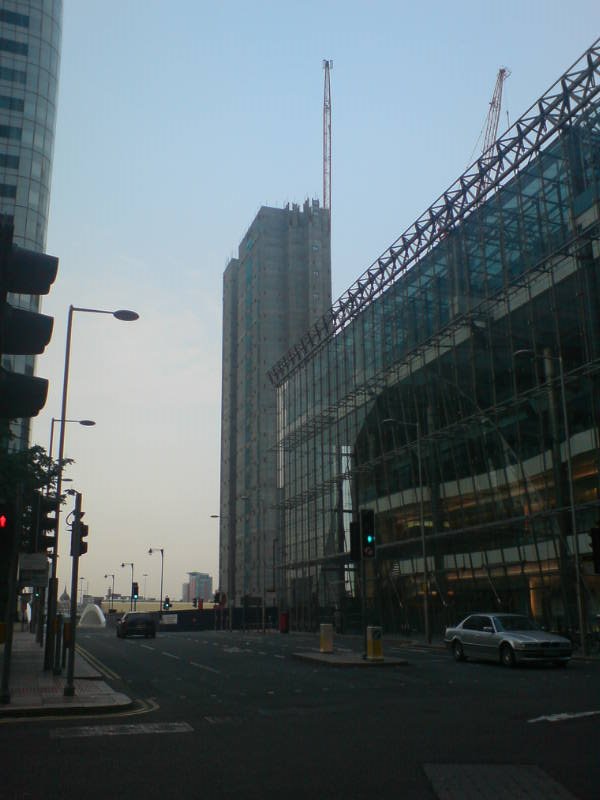
Canary Wharf, London. July 20.


Difficulties

For reasons that have not been explained, my Google account was suspended for a little over 24 hours from Wednesday evening to early Friday morning. Amongst other things, this meant that I could not post to this blog, nor could I read my gmail e-mail, which is my principal account.

I am fairly sure that at least some e-mail was lost. If you sent me any e-mail over the last couple of days and want to be absolutely sure I received it, please resend.

Thursday, July 12, 2007

Monday, July 09, 2007

London, July 9


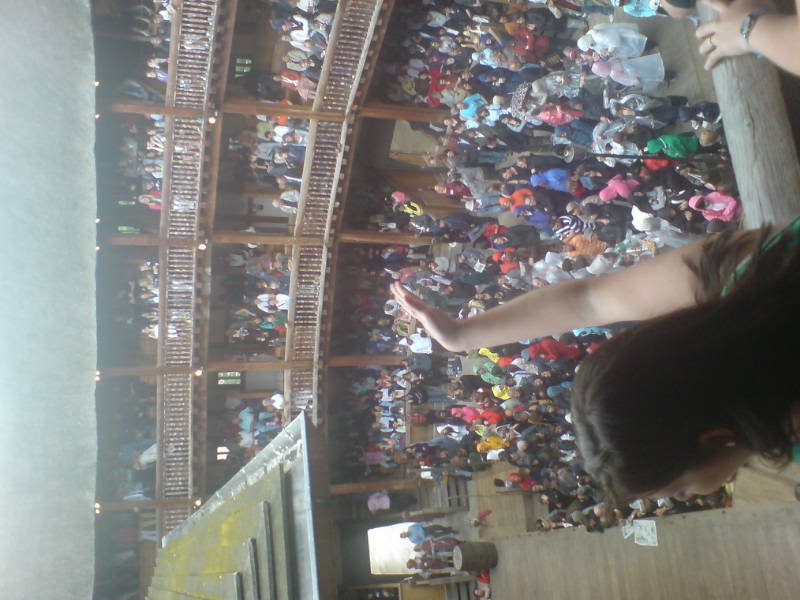
Of course, If I had an iPhone it would have rotated the picture automatically.

Globe Theatre, London. July 9.


Wednesday, July 04, 2007

San Diego, California. June 30.


By the way, for virtually all pictures I am now posting, you can click on the picture to see a larger version of the photograph. I have been sort of assuming that readers had figured this out, but just thought I would mention it.

Tuesday, July 03, 2007

My visited countries update.


Create your own visited countries map.

This is kind of misleading, of course. All I have to do is visit Tijuana for an afternoon, and a huge swathe of North America goes red. (Canada is like this too - I once spent a day in Vancouver). As for China, I have made a number of visits to the coast, but none to the interior. Painting Europe red requires a lot of work, however. Over the last couple of years the big change is that Scandinavia has been coloured in. I have still never been to the Balkans, though. I must sort this out. And I need to go to South America, and Russia, and India. Oh yes, and Israel. (Hi Robert). Israel won't do much for the map though.

Monday, July 02, 2007

Back in London

I am going to be very busy for at least the next month, alas. I shall however continue doing at least some blogging, if only photographs.

Friday, June 29, 2007

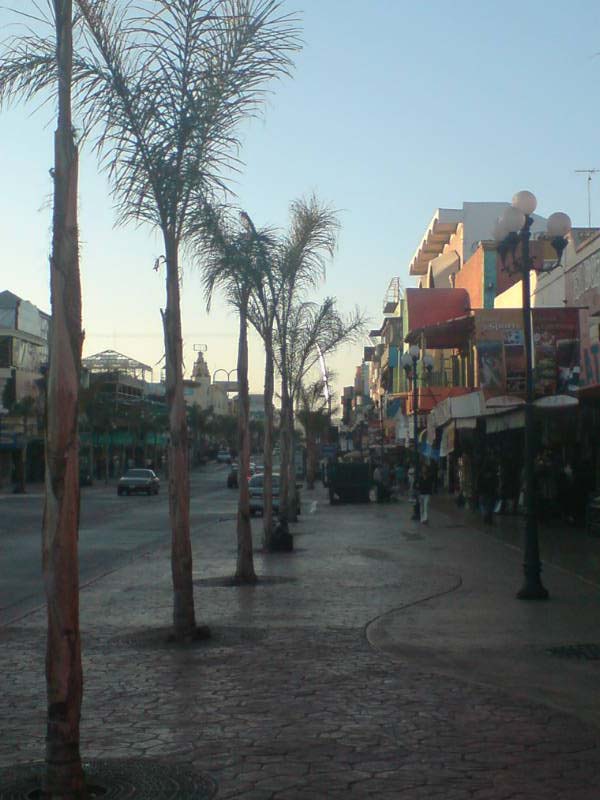
Tijuana, Mexico. June 29.

tiju1.jpg

Update:Damn, I forgot to rotate the picture. I shall do this when I next have access to a good internet connection with my laptop. For now I fear that the Mexican roaming charges are even more horrendous than the American ones.

Further Update:. Now fixed. Yay. I am now taking a rest stop in a McDonald's just off the I5. Heading back to LA.

Thursday, June 28, 2007

Joshua Tree National Park, California. June 28


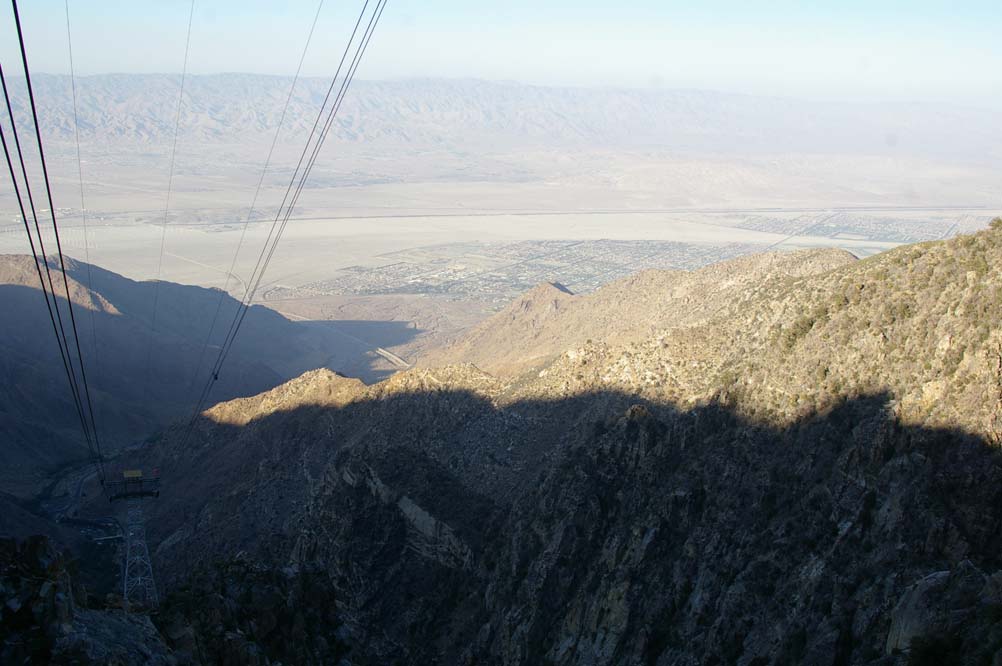
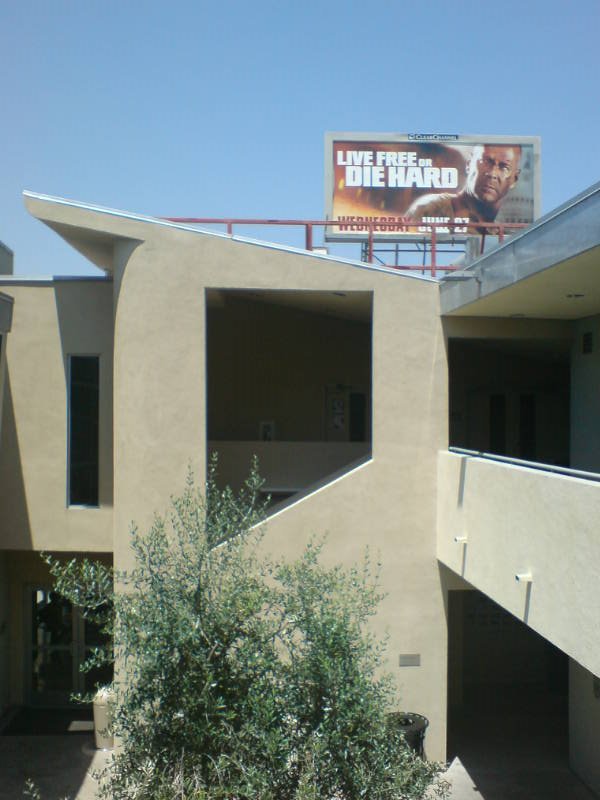
Palm Springs, California. June 27

palm6.jpg

The City of Pasadena is evil, evil, EVIL.

Not the city itself, which is actually very pleasant. (I particularly like the fact that if you go into Starbucks and order a coffee, the people who serve you look like really nerdy graduate students of a variety of different ethnicities. I suspect one could start truly scary conversations with them about condensed matter physics if one really tried).

However, the City of Pasadena (ie the city government) is evil. This morning I parked a car there, and put money in the parking meter. The meter ran out at 11.02am. I arrived back at the car at 11.04am. Under my windscreen wiper was a parking ticket timed at 11.03am. The parking inspector was nowhere to be seen. (I am not exaggerating for effect - those were really the times). Either the parking inspectors in Pasadena are really efficient - perhaps someone at Caltech has invented teleportation and/or time travel - or they do the nasty trick of waiting beside a car with a meter about to run out and issue a ticket the moment it does. (This practice is illegal in England, where traffic wardens may not issue a ticket if there is time on the meter when they first reach the car).

If the mayor of Pasadena is reading this, I would just like him to know that after this I very deliberately drove to a different city before buying lunch, having decided I was not going to put any more money into the Pasadena economy. (This is a shame, as the city has some nice restaurants). This made me feel slightly better, although it is perhaps hard on the poor restauranteurs of Pasadena, who probably don't enjoy giving the city money any more than I do.

Tuesday, June 26, 2007

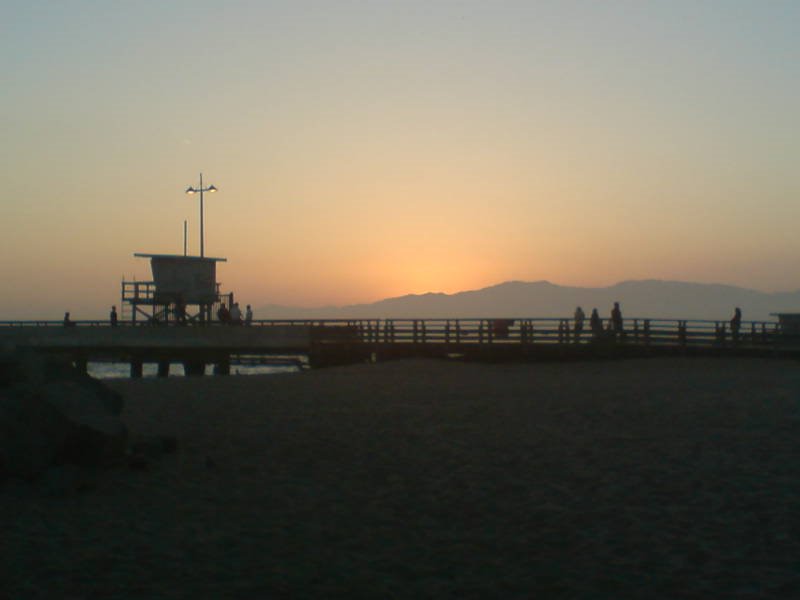
Venice, California. June 26


I really should stop contributing to my phone bill with these roaming data charges, but this is just too much fun.

Westwood, june 25


Demonstrating moblogging

Sunday, June 24, 2007

San Francisco, California. June 24


My entirely unintentional trip to the San Francisco gay pride parade is one me my more amusing recent travel stories.

Saturday, June 23, 2007

San Francisco Bay. June 23


American Airlines have found and delivered my luggage. Well done them.

On the car

Driving the PT Cruiser around for a day or two is quite fun, although it is not the sort of car I would probably buy myself. I don't presently own a car at the moment, but I am generally into reliable and functional with respect to cars. The Cruiser is just ultimately a little too silly for me, although there doesn't actually seem to be anything wrong with it in terms of functionality, and it is quite a pleasant car to drive. (Where is the clutch though? Surely that should be part of the "retro" quality too. Of course, Americans then wouldn't be able to drive it).

In this instance I just ordered the cheapest class of car (as I usually do), and this is what I received. This sort of thing happens a lot when I rent cars in the US. From ordering the cheapest class of car, I once got a Pontiac Grand Prix (with a 3.5 litre engine) and on my most ludicrous occasion a full size Sports Utility Vehicle. (A Chevrolet TrailBlazer). I had never driven such a car before, and so my first experience of doing so was in Manhattan. At rush hour. I discovered this is one of the few ways of getting those yellow taxis to show you respect. Last time I was in California I got a Subaru Forester, which I thought was a lovely car, and was really nice for the relatively long drive from San Francisco to Crater Lake in Oregon and then down Highway 1 back to San Francisco that I took it on.

In Germany last month I did something I rarely do, and paid more money for a more expensive car. I thought that an "Audi A3 or similar" sounded like it would be fun on the German autobahns, and as it was only £20 more for the weekend, I paid the extra money. What I was actually given was a Skoda Octavia. Although it could be argued that an Octavia is very similar to an Audi A3 as both are based on the Volkswagon A4 platform and are at a certain gut level the same car, I wasn't really impressed. In the event that I had met a supermodel in the nightclubs of Hamburg who felt like coming for a drive to Rostock with me the next day, I don't think she would have been impressed either. Thus I am back to always ordering the cheapest car and perhaps being pleasantly surprised.

I am in the Bay Area now (although I think my luggage is in Los Angeles - it is not with me) and I am returning to the Los Angeles on Monday so I shall sample another rental car then.

Update: Actually come to think of it, the Pontiac might have had a 3.8 litre engine. It wasn't short on power, anyway. It almost made me feel at home. Australians do love cars with ludicrously overpowered engines. They are like the Germans that way. How they are not like the Germans is that speed limits on Australian motorways are no higher than 110km/h and are generally enforced, so what exactly you do with a car like this is something of a mystery.

Friday, June 22, 2007

Piedmont, California. June 22.


For some reason I always get really ludicrous rental cars when I am in America.

Wednesday, June 20, 2007

London, June 20.


Update: That was in the pub after my talk on China at Christian Michel's last night. I was very happy with how the talk went.

Saturday, June 16, 2007

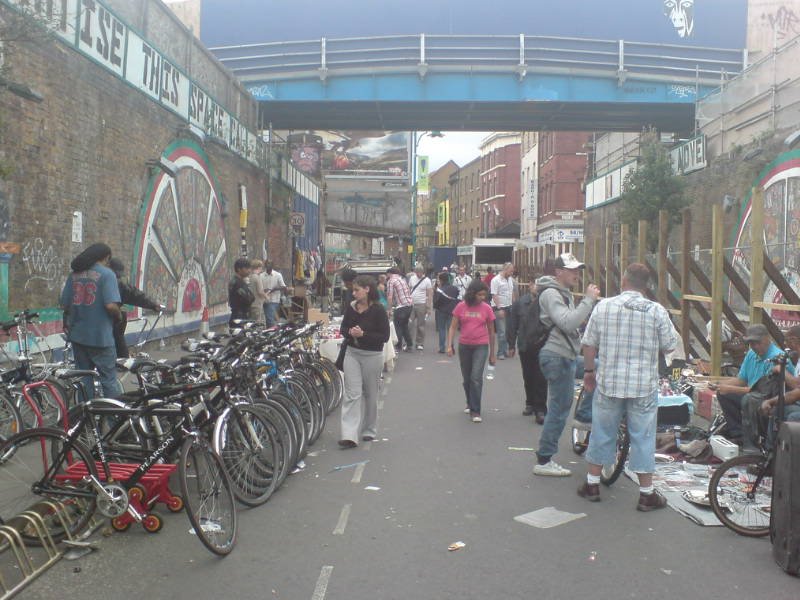
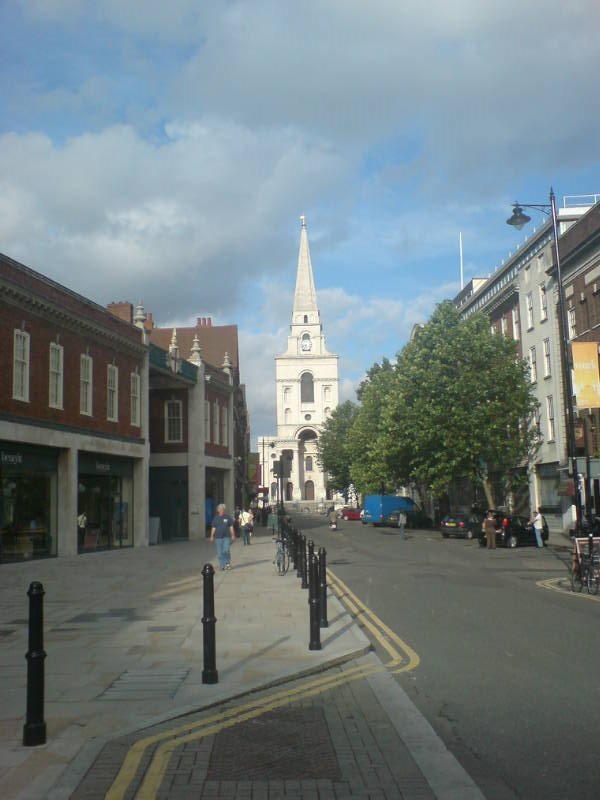
Spitalfields, London, June 16


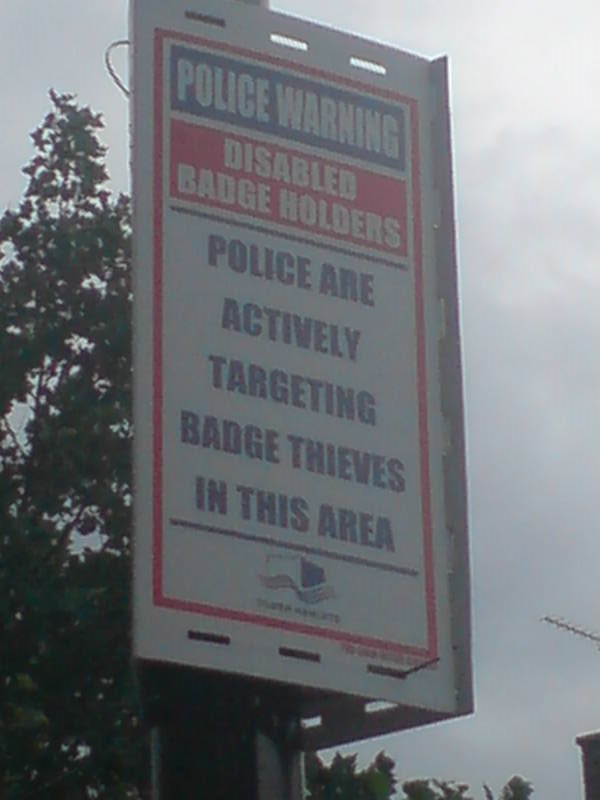
East London, June 16


Yes, I am sure the police sit in the station in the morning, and the PCs are told just how many badge thieves they are expected to catch today.

Wednesday, June 13, 2007

Regional Variations

alham2.jpg

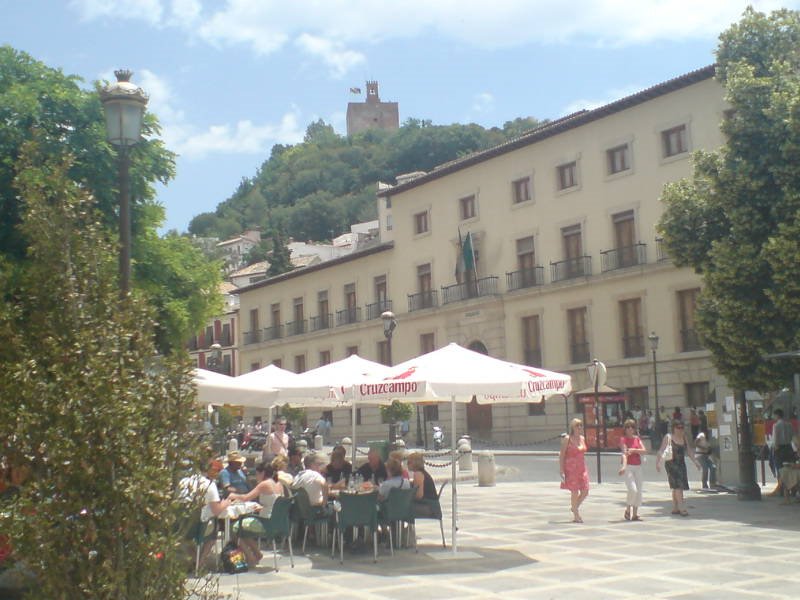
As I have mentioned in pieces, I did enjoy Granada at the weekend. Most of my experience of Spain is of further North. I have been to Barcelona several times, to the Basque country several times, and to Galicia once. (I also went to Madrid once in 1993). Andalucia is relatively new to me, although I did go to Almeria for a weekend in January this year.

Given the loveliness of the place and the fact that Granada is a tourist destination, for one thing I was struck by just how cheap it was. One of the big factors in this is the free food. In Granada you go into a bar and order a drink, and you get free tapas. Generally it isn't just a bowl of olives, either. You order one beer, pay €1.50 to €2 for it, and you get quite a nice little item of food with it. Have three or four beers and you will have also had a good lunch. It took me a while to figure this out. For the first bar I went into, I pointed at the tapas that one of the other customers was having and suggested I would like one of those, and I was immediately asked it I wanted a beer. I said yes, but what I did not understand at the time was that ordering the beer made the food free. A few minutes later I ordered another beer, and a (different) plate of food arrived. I pointed out to the barman that I hadn't ordered it, but he laughed and explained the situation to me.

Still, though, I didn't appreciate yet how ubiquitous this situation was. On Saturday evening, after walking around the Alhambra and other parts of the city, I was tired, and I sat in a restaurant and had a large meal. I then thought I would go bar hopping for a bit, but when I did so, I found I was being given lots and lots more food with my drinks, to the extent that the restaurant meal had almost been rendered unnecessary. In the evening, the bars were big on the toasted cheese and ham sandwiches.

Long term readers of this blog (assuming I have any) will remember that I have encountered this tradition before, but it is not really a northern Spain thing. In the Basque country the bar food (pintxos) is elaborate and delicious, but you do have to pay for it. Similarly, I have never received free tapas in Barcelona. I think I did encounter it in Almeria, but it did not seem as ubiquitous as in Granada. It does make for very cheap meals though - you can have three beers and a substantial amount of food for €5.

The other thing that was different in Granada from what I was used to was the set menus in restaurants. In Spain, you go in and order the menu del dia, and you get a three course meal for about €10. Normally, this includes drinks. Quite often you get three courses, bread, and a whole bottle of wine for that €10. Oddly, though, in Granada the menu generally doesn't include the wine. You have to order drinks separately. On Sunday I had a three course meal for €7, but I had to order my vino tinto separately. I think I was charged about €1.20 for a glass of wine. I ordered and consumed a second glass of wine half way through the meal, but I was only charged for one. So it didn't exactly break the bank.

However, when you order drinks in Granada, free food.
When you order food in other parts of Spain, free drinks.

Neither of these things are reversed.

It is all complicated. I am sure I would figure it out more quickly if I knew the language.

Update: When I listed the parts of Spain I had been to, I forgot the little trip to Valencia I made in January last year. Another nice city, culturally close to Barcelona. I don't recall getting any free toasted cheese and ham sandwiches there.

Tuesday, June 12, 2007

Granada, June 9, again.

alham.jpg


I seem to be managing to write or post something about every second day on this blog. This seems to indicate that I am serious about bringing this blog back, so I think I shall keep it up. If I am going to make it permanent I need either a redesign or I need to thoroughly hack the template. I think the blog looks a bit generic right now.

Moblogging is certainly fun, although it does lead to a lowering in the quality of pictures on the blog a little. It is not the same as taking 100 pictures, looking at them all carefully on a laptop screen, and then posting the best. If you blog from a mobile directly, you pretty much end up posting whatever you were lucky to get.

I think this is an example of a general conflict that occurs when you post photographs. One possibility is to post the best photograps in terms of the quality of the picture itself. The other is to post the most interesting photographs in terms of making some sort of point, or pointing out some irony between foreground and background, or something like that. Although I am a reasonably serious photographer and I care about taking the best possible photographs and succeeding in terms of the first category, the second almost always wins when I decide what to blog. (For instance, I thought that seeing the EU flag flying in the exact spot where once flew the banner of Ferdinand and Isabella was quite delicious, although nobody commented on it). I think this makes the blog slightly less striking on first glance, although hopefully it makes it more interesting if you settle down and read.

Monday, June 11, 2007

Redirection

I have been waving red rags at bulls over at Samizdata.

By the way, the Alhambra at Granada is one of the most stunning sites to visit in all of Europe. I will post some more pictures over the next few days.

Thursday, June 07, 2007

A lack of posting

I have been busy, so this blog has been left fallow for a few days. On the other hand, if you are desperate for something from me, I wrote a small on Samizdata yesterday on mobile phone statistics, and I have been leaving a wide assortment of comments on the Olympics logo etc etc over here.

The funny thing about the Samzdata post is that it was intended as a tiny "Ha, isn't that funny" comment about the fact that Britons dropped 855,000 mobile phones down the toilet in 2006 and I added a bit if filler. I have received no comments whatsoever on what I thought the article is about, and a lot on the filler. That's the way it goes, I guess.

Sunday, June 03, 2007

Canary Wharf, London. June 3 2007


When the September 11 atrocity occurred in 2001, there were a number of new buildings under construction in the Canary Wharf office district in East London. They were all completed, but for about several years after that there were no new buildings under construction. It may have been that September 11 slowed demand for new office space, it may have been that potential tenants were nervous about tall buildings, or it may simply have been that there was a slowdown coming in the financial sector anyway. In any event, for several years there was a significant amount of vacant space, although not to anything remotely approaching a disastrous extent. The vacant space has filled, but gradually. However, over the last year the vacancy rate has become tiny and several large buildings are under construction. Whether this means that the market is about to burst and we are headed back to a situation with empty space I don't know, but for the moment things are quite fun to watch.

As it happens Canary Wharf group has planning potential for the buildings presently under construction and for three or four more to the west and north of the present buildings. After that - perhaps in arount 2012-2015 - further plans to expand the Canary Wharf office development are going to require more planning approval. Some of this is kind of there - Canary Wharf Group and British Waterways have agreed to embark on a mixed use development (some of which is to be offices) on Wood Wharf immediately to the east of Canary Wharf, and although Tower Hamlets council has supposedly approved this, the regulatory environment is unlikely to be quite as benign as what has existed so far. There are also plans to develop various things at the Royal Docks further east, but what can be built here is height restricted due to the nearby London City Airport. Things do become interesting in about 2015-2020 when there is a lack of space for more large office buildings. From a transport perspective, the Jubilee Line Extension may be the newest piece of the London Underground, but it is already very crowded at morning rush hour. Crossrail needs to be built if Canary Wharf is to keep growing at its present rate for that much longer.

The only direction from Canary Wharf I haven't discussed in this post so far, is south towards Greenwich. The area directly to the west of Canary Wharf is perhaps the most interesting. There are all kinds of residential towers, retail space, hotels, and the like going up to provide support services (and literally, lower rent space) that interacts with the rather clinical office developments. This is gradually pushing west. I would favour abandoning all planning controls for the entire Isle of Dogs and letting a great new Pudong arise in London. This might cause a certain amount of conflict when it came in touch with the housing estates to the far west of the Isle of Dogs - some of London's most impoverished - but its a matter of buying the residents and the council out. Most things like this can be resolved with enough money.

Saturday, June 02, 2007

Świnoujście, Poland, last weekend
pol3.JPG

I don't think I can call this a quota photo, as that would imply some sort of quota.

Friday, June 01, 2007

Redirection

I have a piece on the murder of Alexander Litvinenko, fast casual restaurants, and the severing of penises over at Samizdata.

Sunday, May 27, 2007

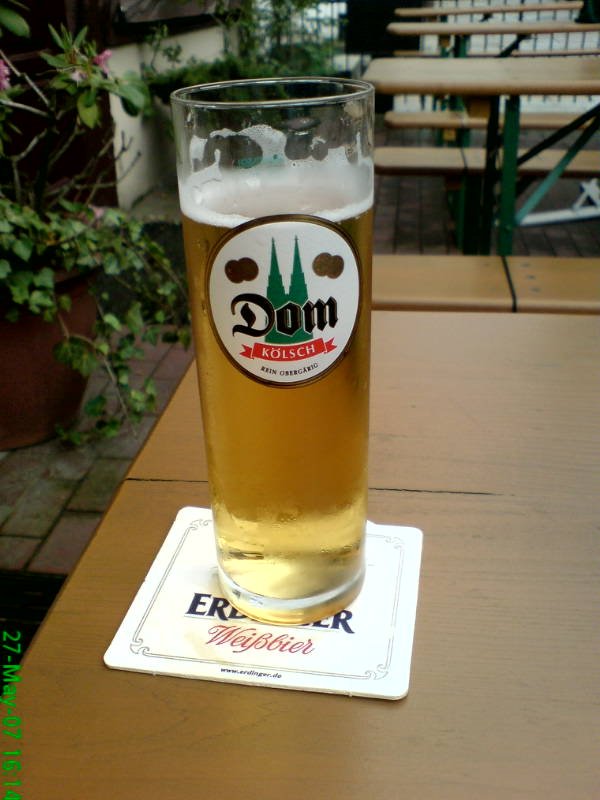
Kolsch is also a fine thing

Much easier to find in London.though. (Sometime soon I will figure out how to get an ampersand and hence am umlaut in T9). (Actually it doesn't seen to even know the word ampersand. My regards to itap).
Now in a bar drinking beer - still in Rostock

beer12.jpg

Right now I am having a Störtebeker Schwarzbier. The schwarzbier style is traditional German beer that got kind of imprisoned behind the iron curtain but has had its profile raised a little since the end of that. It is sort of a black lager. Not exactly a stout, but something headed in that direction.

To me, what it tastes like is an "old" beer. For what I mean by this, a little history. When the British first came to Australia, Australians attempted to make traditional cask conditioned ale in Australia. People who enjoy real ale know that this kind of beer is not very stable: it needs to be kept at the correct temperature and properly looked after before being drank. I enjoy a real ale more than the next guy, and I know that the experience of a "bad pint" is unfortunately too common. This style of beer making didn't work in Australia, because the climate was too hot and the beer would go off before being consumed. Thus by the end of the nineteenth century, beer made in Australia had evolved, and a black lager like beer is essentially what it had evolved into.

Around the turn of last century, proper lager making was introduced into Australia (by, amongst other people, the Foster brothers from the US) and this became the bulk of the Australian beer market. Lagers became known as "new" beer, and the traditional dark beers as "old" beer. Old beers were (and are) top fermented, and new beers bottom fermented. (This refers to the position of the yeast when the beer is being brewed. For a top fermented beer the yeast is at the top, and for a bottom fermented beer it is at the bottom.

The most common old beer that is still available is "Toohey's Old", which is still available on tap in most pubs in Sydney and the state of New South Wales. "Toohey's New" is the most popular lager in NSW. Toohey's traditional Sydney rival was Tooth's, which made similar beers, but its beers labels were disparaged after Tooth's was bought by Castlemaine of Victoria, when that brewery turned its Melbourne brands (Foster's and VB) into national brands. Old beers other than Toohey's still exist, but they are minority boutique brands these days.

However, when foreign beer experts come to Australia, the always really like Toohey's old. It is massively overrepresented in guides that talk about "Great beers of the world". Certainly it is the only beer in Australia produced by a mass market brewery that regularly manages it. I rather like it.

And German schwarzbier tastes very similar. The history is completely different, so I suspect this is an accident. (I think both the Germans and Australians would see these as old fashioned working class beers though).

Hmm. Wikipedia tells me that schwarzbier is now bottom fermented but is these days top fermented. If I were one of those people who worries about products being "authentic", perhaps the Australians do better than the Germans.

Now in the central square in Rostock


I wonder how much uploading this from my phone will cost. There is a simple way to find out, I guess

Saturday, May 26, 2007

On my way to northern Germany


Blogging levels over the weekend will depend on internet access and inclination

Thursday, May 24, 2007

The Gotheborg in West India Dock


I am photographing and moblogging directly from the K800i. I will see later how it turned out.


Update: Not bad. I was really quite impressed when I discovered the built in Blogger client on the phone, and when I discovered the phone will resize and upload photos to my blog automatically. I think the only problem is the small screen of the phone. The phone's camera is capable of taking quite reasonable pictures, but it is quite difficult to tell which ones are the good ones on the small screen of the phone. All digital photographers know this problem - you just don't know which are the good ones until you download them to a computer and look at them on a bigger screen later. (Actually, this particular photo is better if you click on it and look at the larger version. Still, the bright overcast sky behind the masts is tricky). Still, this is a fun feature. I am clearly going to use it. (The annoying thing is that data roaming charges are such that I probably won't use it when I am outside the UK - which is of course the time when I am most likely to want to use it).

One slightly odd interface issue is that it does not seem to be possible to associate the camera with a particular blog when you use it for the first time on your phone. You upload a picture for the first time and it creates a new blog. It then sends you a token by SMS, you type this into blogger on a computer, log in to your Google account, and the blog is then associated with your Google account. If you have any existing blogs, you are asked whether you want to move any mobile created content to one of those blogs. I did this, and the posts are then moved to your existing blog and the new blog is deleted. All future mobile posts go straight to the existing blog.

In truth, I suppose this is a reasonable way of doing it. I was expecting to be asked to log in to Google on my phone, and to be able to then choose which blog I uploaded to. As it was I was slightly baffled by this lack of option until I logged into a computer and everything was done for me. I suppose doing it this way avoids messing around with passwords and logins and the like on a tiny phone keyboard.

Tuesday, May 22, 2007

A touch more on phones

This piece from the Register on what is wrong with the mobile phone industry is quite entertaining.

The N-series must surely take the cake as the world's most ill-conceived range of phones, being slower than treacle, as reliable as Windows 3.1 and clearly designed by a committee of unloved marketing droids.

I haven't used a Nokia for quite a few years, and I certainly haven't used an N-Series, so I can't really comment on that, but the basic point that handsets having lots of functions that are hard to use (and that are weirdly configured and/or disabled to make operators happy) are driving us all mad is a fair one. The further point that I would make is that this is for the rich world only. In the developing world, handset design is much better. Handsets are simpler and cheaper, and the weird incentives to make handsets complicated and expensive are generally not there. So if you go to Africa handset design really is more Nokia circa 2000, and it is a lot better.

However, about my new phone

The K-series Sony Ericssons, otherwise almost perfect phones, have SIM card slots designed to punish the world's nail-biters and tragically have neglected a volume setting for message alerts.


He is quite right. The SIM card on the K800i is a partcularly difficult one to remove, but this is not Sony-Ericsson specific. SIM cards are almost always hard to remove. Here is where operators and handset manufacturers choose not to understand how consumers use phones. SIM card portability was just about the best feature that the GSM phone standard was designed with. Your phone number and phone bill is not associated with the phone, but with this little portable card you can move from phone to phone. CDMA does not (really) have this, and this is as big a reason as any for GSM's current dominance of the global market. It is this big a deal.

However, the whole phone industry pretends that this is not so. They sell you a SIM and a phone together, and they expect that you will use the SIM and phone together whatever you do with it and wherever you go with it. Sometimes they lock the phone so as to prevent you switching SIMs around. (The fact that a huge "unlocking" business has come into being to reverse this practice might have suggested to them that they have their business model wrong, but no). Always, though, they put the slot into which the SIM goes in a very inconvenient position, usually underneath the battery. Even if you will be charged ten times your usual call cost if you go abroad and keep your SIM, they somehow believe you will just pay, and not want to change to a cheaper local SIM. If they charge ten times as much for some service than do their competitor, they will somehow believe that you will pay them this rather than get a SIM from their competitor and swap them round.

But people don't behave like this. At least, many people don't. I have a number of active SIMs, and a number of phones. Which SIM goes in which phone varies from time to time, depending on what service I am using (data, SMS, internet), what time it is (I have an off-peak SIM that gives me practically free calls on the weekend) or where I am (I have an Australian pre-pay SIM that I use when I am in Australia). Sometimes I might run down a battery and I have a spare phone that is charged up, so I will switch the SIM.

But manufacturers make it hard for me to do this. I have to remove the back, remove the battery, get the SIM out of an awkward socket, then reverse the process and switch everything back on again. I don't want to do this. I want it to be simple. Why do they not understand this. If they do understand this, why do they try to change my behaviour rather than cater to what I want. What I want is external slots for my SIM cards. The K Series Sony-Ericsson phones are really good with respect to memory card slots - the memory card slot is external and you just open the cover and push and the spring loaded memory card pops out. (It's a shame that they feel the need to use Sony's proprietary Memory Stick rather than SD cards like everyone else, but that is Sony. It is not a big deal, as the Memory Stick is common enough). Why can't they do the same with SIM cards. It would really make me happy.

Rant off, anyway.

Monday, May 21, 2007

Playing with a new phone

I have just got myself a new phone. It's a Sony Ericsson K800i. This model was released about a year ago, so it is not quite state of the art. It is Sony "Cybershot" branded and has a 3.2 Mpixel camera. As phone cameras go this is not bad. It is certainly better than any other phone camera I have had, although it does not compare with a dedicated digital compact camera, let alone a digital SLR. What I want is for the camera in my phone to be good enough that if some dramatic news event happens in front of me, or merely if I see something in front of me that I want to photograph and blog, I will be able to take decent photographs. I am getting there, I think. This camera is sort of okay for this purpose. Not great, but okay.

The K800i phone was pretty state of the art a year ago, but Sony Ericsson have not really improved upon it since. They have just released a supposedly better K810i, but this is little more than consmetically different. The guts of the phone are the same. The release of the K810i has led to some particularly good deals becoming available on the K800i, which is why I have just obtained it. The state of the art camera phone (in Europe at least) seems to be the N95 from Nokia, which has a 5 megapixel camera and inbuilt GPS. I haven't played with one of these to see how good the camera is, but I am sure it is another incremental improvement. Inbuilt GPS is clearly a major feature. I have an external Bluetooth GPS unit that I use with one of my other phones, and it is tremendously useful. Having it built in will clearly be a step forward from that. It will probably be included on the phone I get next year.

However, the N95 is new and very expensive, so I have forsaken it in favour of the K800i for now. Stick a T-Mobile SIM with an unlimited data tariff in the K800i, and how good is it?

Firstly, it is a 3G phone. This is good. Accessing e-mail and websites is much faster than the GPRS phones I have used until now. Having now had a 3G phone, I am not going to go back to GPRS. This means that I am not going to buy a first generation iPhone. (This does not mean the iPhone will fail, particularly given that it is initially aimed at the US where 3G phones are less common than Europe. The key issue there is its user interface. If it is any good, the iPhone will succeed. If not, not).

However, what do I want to use the phone for, besides calls, photographs, and SMS messages? Music? No, I have an iPod for that, and the music player will run down my batteries. Although the K800i has a music player, I have no intention of using it. E-mail? Absolutely. I use gmail for my e-mail, and the first thing I do is download Google's very clever gmail applet. This is pretty good for reading e-mail on the go. Sending an e-mail is bit of a pain, but that is the price of trying to compose e-mail on a numeric keypad. Even with T9, it is tedious. Obviously if I got something with a full keyboard it would be easier. (It will be interesting to see how well the touch screen interface works on the iPhone).

While installing the gmail app, Google also suggests that I install the Google maps application. this is cool, and I immediately use it to look at satellite photographs of the building I am in, and a map of the nearby area. It can give directions too, which is clever. What would make it really good is an interface with inbuilt GPS. Oh well, next year for that.

Still, Google is doing well here, Microsoft has spent years trying to move the PC model to mobile phones, in which Microsoft provides the underlying operating system and takes a royalty on every phone sold. I personally think their resulting product (Windows Mobile) is quite decent, but the PC model isn't going to work. For one thing, Nokia, Motorola, and Ericsson have seen what Microsoft did to the PC market and they are not going to let that happen to them. Google are taking their web model to the phone, and are providing search and web based apps. This works better in the sense that it is going to get their software on more phones. From a revenue perspective it is trickier, though. Google's advertising model is to provide small advertisements on the top and side of a web page. On a 240x320 phone screen there is no space. I am not sure how they are going to overcome this.

What else do I want on my new phone? There is a standard web browser on the phone, but it isn't very good. In my experience the best mobile browsers by far are from Opera. Opera mobile runs on Windows Mobile and Symbian (and is excellent) but not on the K800i. The Java based Opera Mini does run on the K800i, so I install this and use it for web browsing. The combination of Opera Mini and the 3G data connection gives me easily the best phone based web browsing experience I have had.

One final thing is instant messaging. The phone did not come with an inbuild instant messaging client. What I would really like is Skype (just for its instant messaging - for voice I am perfectly happy to use a phone as a phone). However, I am also used to using MSN messenger, as my previous phone was running Windows Mobile. A bit of Googling confirms that there is a free Java based client called "QuickIM". I install this and it rather irritatingly sends advertisements for itself to my friends the first time I use it. But it works.

So the new phone really isn't bad at all. I like it. It can do quite a lot. Mobile based Java apps are useful. An unlimited data plan makes it far more useful than it would be without one. That is a big incentive to do business with T-Mobile or with 3, as these are the two networks presently offering them.

Saturday, May 19, 2007

Am I am old fogey?

At this precise moment, I am sitting in a bar/cafe outside an indy music club in London's East end. This is largely populated by people a good deal younger than myself - thy are what I would echo boomers, although I sometimes wonder if anyone else does. Actually, the general media tends to use horribly derivative terms to describe this ground - vile expressions like "Gernation Y" or "Generation Next". I prefer "echo boomers" myself, as it gets to the gist of what we are seeing - the post war baby boomers themselves got to having children themselves in a big way in the late 1970s and early 1980s, and there was another demographic bulge that was just hitting adulthood around the turn of the millennia. They have just got to the point where they are probably the group doing creative things in the most interesting ways. As well as being a demographic bulge, they are the first generation to have really been exposed in a mass sense to computers and networks throughout their teens. I was born in 1968 - I come from the last generation not to be exposed to computers and networks prior to adulthood in this way. It is not so much that I missed these things myself - personally I did not. I encountered computers in my early teens and the internet in my late teens - but at that point this was unusual. In my generation it was the nerds who did this kind of thing. The first web bubble in the mid to late 1990s was led by the nerds of my generation driving the technology into the mainstream. In 1999 being someone who had used the internet for more than a decade was something you could use to portray yourself as being ahead of the curve.

Now things are different. The younger generation - seemingly all of them - are comfortable with technology in a way that my generation was not. It is just part of the background. They are the ones driving the current tech boom (if you like). My having used the internet for as long as I have no longer impresses, because surely the network has always been there. Discussing the time when this stuff was just coming into being is the sort of thing that might elicit questions as to whether I knew Charles Babbage personally. Well, almost.

However, the flipside of this is that in a way this is a more comforatable environment for a nerd like me. Getting out a laptop at a table in a place like this does not get any "What a nerd" winces that it might in a place where my own generation is more prevalent. There are other laptops around. WiFi is expected. (It isn't always there, though. The search for wireless is something that this generation often pursues, I think).

(I might comment that Apple is clearly doing *really* *really* *really* well amongst this generation. I am using a subcompact Sony Vaio which gets looks for its size and elegance, but not for being a Sony. Yesterday's brand, I fear).

In fact, though, I am in a way still ahead of the curve. I have grown tired of seeking out WiFi hotspots, so I have recently got myself a 3G (HSDPA) wireless card for my laptop. I now get my internet access from 3G mobile phone networks, and no longer need hotspots, at least not when I am in the UK. The existence of technology like this has not become widely known yet. Or perhaps the fact that such technology can be had relatively inexpensively has not made itself known yet. Anyway, I have got to the amusing situation where I am getting looks and questions from other people with laptops in cafes and bars asking why the hell I have internet access when they haven't. It is quite amusing. Perhaps I am not an old fogey after all, but just an old wizened nerd. I need to work on becoming something of a guru figure, I think.

The amusing thing is that someone who has discovered 3G access ahead of the curve looks just like someone did who had discovered WiFi ahead of the curve three or four years ago. My laptop has a big lumpy thing sticking out of the PC card slot on its left.

east.jpg


In any event, I think the utility of 3G (and possibly WiMax as well) is going to demonstrate pretty quickly what a hacked together and limited transitional technology was WiFi. The truth is that the US (and other countries) created the 2.4GHz unlicensed frequency band with serious restrictions on the power of devices, and WiFi was a response to the question of "What can we do with it?". Ultimately the limitations of the 2.4GHz band were such that what could be done with it was not very good compared to what could be done with other technologies and frequencies (although the "b", "g" and "n" revisions have steadily improved it) and we are about to see this in a big way. (Local governments, local business bureaus and large companies have just about got to the point where they are building wide area WiFi networks - of course this is an indication that the technology is obsolete).

If you look carefully at the lump sticking out of the PC card slot on the left of my laptop, you will see it has a Cingular logo on it. Why I am using a card that was sold by Cingular, a company that does not do business in Europe? Well, I am playing the glorious game of mobile phone subsidy arbitrage. Mobile phone companies provide hardware and services at prices to customers that bear no relationship whatsoever with the costs of providing the services to their customers. This often means bundles of services that sometimes include hardware (bundled with services) at a small fraction of the cost of the hardware from its manufacturer. These bundles also sometimes include services sold very cheaply if you buy appropriate hardware, or if you buy other services. We now have ultraefficient global markets for all kinds of unbundled goods and services via eBay, Amazon, peer to peer networks and other places, and such attempts to charge prices so divergent from costs are vulnerable to these markets. The trick is to buy a bundle of goods and services from a telephone company, onsell the bits that you don't want and keep the bits that you do, while perhaps buying pieces of other people's bundles the same way. As it happens I purchased my 3G card from someone in the US on eBay who had clearly bought it bundled with a data plan but who had not needed the card as he already had one or something similar. The 3G internet contract was part of a bundle from a British mobile phone company that came almost as a free extra when I bought something else. Put them together and I have not free but cheap internet access on my mobile wherever I go.

And this is perhaps why I am ahead of the curve. Getting 3G internet at a good price involves complex games of arbitrage, and I am very good at this kind of thing. That, though, is the problem with phone companies. They are so inept that they don't realise the best way to operate is to simply provide services at costs plus a margin. They will, eventually, thanks largely to arbitrageurs like me forcing them to. (I don't know why they haven't figured this out , given that the exact same thing happened to them once already when the settlements system for chargin international phone calls collapsed in the late 1990s). And I think that in a year or two 3G cards in laptops (probably internal ones rather than lumps in PC Card or Express Card slots) will then be ubiquitous. And then I shall have to find some other way to impress people.

Or perhaps I shouldn't bother trying.

Tuesday, May 15, 2007

Redirection

I have a piece discussing the Intenational Cricket Council, Australia's decision not to tour Zimbabwe, and Pakistan cricket and Bob Woolmer's death over at Samizdata.

Wednesday, May 09, 2007

Cafe Fiasco?

fiasco.jpg

(Oslo, Norway. May 5, 2007)

Monday, May 07, 2007

I need to post something

One odd (or perhaps not) consequence of my detailed blogging of the World Cup is that anyone who has read or stumbled on this blog recently has concluded I am some kind of weird cricket obsessive, and that is just not true.

Well, actually of course it is true, but it doesn't do me justice, for I am many other kinds of obsessive as well. (Hmm, many kinds of obsessive. Can one actually be many kinds of obsessive, or does the word "obsessive" imply that it can only be about one thing?)

Anyway, just so that there is something else on the top his blog, here is a nice picture of Gothenburg harbour that I took from a hill overlooking the city yesterday.

goth2.jpg


In the centre, we see one of Europe's relatively few surviving shipyards. (There is a bigger one in Odense in Denmark (where Emma Maersk was built) and various others in Germany and Russia). The great maritime traditions of the Baltic are impressive.

The other thing the picture makes clear is of course the simple fact that Sweden is a great industrial country. Think of all the great international Swedish companies - Volvo, Saab, Husqvarna - and there are many more, and there is a sense that Sweden did many things right. The striking thing of course is that it is a small country. I come from a small industrialised country that has and had industry, but it was protected industry largely selling things domestically. In the international world, we can and always have relied on being a resources power. There's not harm in that if you are a resources power, but the Swedes do demonstrate the relative importance of free trade. (This is something that admirers of the "Swedish Model" often neglect, but Sweden's commitment to free trade was what actually made it rich, and what made its industrial companies so good).

Blog Archive